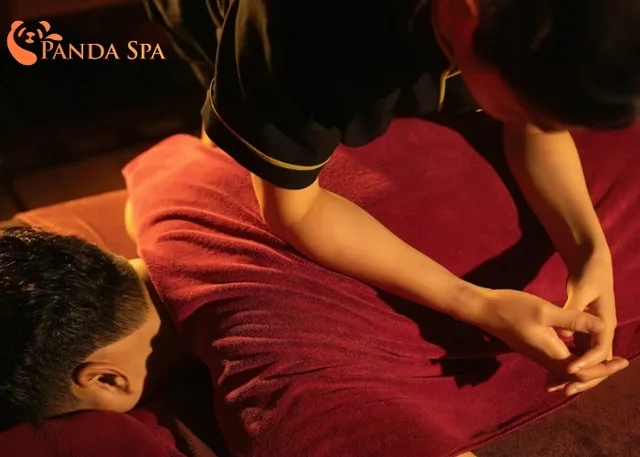
Table of Contents≡
CONTACT NOW
In the context of the increasing rate of people suffering from musculoskeletal pain syndromes and chronic stress, conservative medicine is turning its attention back to traditional therapies. Have you ever wondered what is shiatsu massage that the Japanese Ministry of Health officially recognized it as an independent medical therapy in 1955? Without using essential oils or intervening with complex machinery, this technique relies entirely on physical pressure from the fingers to radically resolve muscle knots. Let's join Panda Spa to explore the scientific basis, historical origins, and proven medical values of Japanese Shiatsu massage.
1. What is Shiatsu Massage? Concept and Outstanding Features
To objectively evaluate the value of Shiatsu therapy, we need to dissect the technical characteristics and practical principles that make a difference in this acupressure system.
1.1. Full definition and basic characteristics of Shiatsu
Etymologically, this term is a compound word in Japanese: "Shi" (finger) and "Atsu" (pressure). When defining what is shiatsu massage from a professional perspective, this is a form of physical therapy that uses the practitioner's body weight, transmitted through the thumbs, palms, and elbows to create perpendicular pressure on acupressure points (Tsubo) on the body.

The core characteristic of this method is the principle of sustained pressure. Instead of continuously rubbing to create heat-generating friction on the skin surface, the specialist will maintain a fixed pressing force at the blockage point for 3 to 10 seconds, requiring precise knowledge of the musculoskeletal system.
1.2. How is Shiatsu Massage different from other massage methods?
The most distinct distinguishing feature of Shiatsu compared to Swedish Massage or Thai Massage is the complete absence of lubricants. This is a specific type of Japanese oil-free massage. Customers participating in the therapy will wear thin, sweat-absorbent cotton clothes and lie on a hard flat surface (usually a Tatami mat).
Operating in a dry skin environment is a mandatory technical requirement. It creates maximum physical grip, helping the pressing force penetrate through the fascial layer straight into deep muscle bundles without slipping or damaging the epidermal skin surface.
| Technical Criteria | Shiatsu Massage (Japan) | Oil Massage (Western) |
|---|---|---|
| Contact environment | Wear thin clothes, no lubricating essential oils. | Skin-to-skin, using a lot of carrier oils and essential oils. |
| Impact morphology | Static pressure, perpendicular, concentrated at one point. | Gliding (Effleurage), kneading (Petrissage) along the muscle direction. |
| Medical goal | Release muscle trigger points, clear meridians. | Increase muscle temperature, relax the surface, reduce friction. |
2. Operating Principles of Shiatsu Massage
The theoretical system of Shiatsu is the clearest evidence of the combination of Eastern philosophy and the anatomical basis of modern Western medicine.
2.1. Principle of balancing Qi and the meridian system
According to traditional Eastern medicine, the human body operates based on a vital energy network called "Qi". This Qi flow circulates continuously through conducting channels called meridians. Pathology, stress, or incorrect living postures will cause knots, hindering this circulation.

By creating pressure on acupoints, Shiatsu acupressure acts as a physical impact force helping to break blockages, thereby re-establishing the smooth flow of Qi, returning the body to a state of natural self-balance (Homeostasis).
2.2. Mechanism of action from a modern scientific perspective
If removing Eastern medicine concepts, how does modern medicine explain the mechanism of what is shiatsu massage? It is the phenomenon of "mechanical blood pumping" combined with nerve reflexes. When pressure is concentrated on a spasming muscle area (local ischemia), the old blood containing a lot of lactic acid will be pushed back.
Right at the moment the pressing force is released, a new amount of blood rich in oxygen and nutrients immediately floods into the muscle cells. This instant metabolism helps soften muscle fibers. At the same time, static pressing force stimulates the parasympathetic nervous system, ordering the body to reduce the secretion of cortisol (stress hormone) and boost the production of neurotransmitters that bring a pleasant feeling.
"Shiatsu is a form of manipulation using thumb and palm pressure on the body surface to correct internal dysfunctions, promote and maintain health, and assist in the treatment of some pathological conditions."
- Legal definition from the Japanese Ministry of Health, Labor and Welfare.
2.3. The combination of Eastern philosophy and modern medicine
The success of this therapy lies in quantifying abstract concepts. The diagram of Tsubo points (acupressure points) in Shiatsu actually has an extremely high matching rate with the map of muscle trigger points and nerve intersections in Western anatomy.
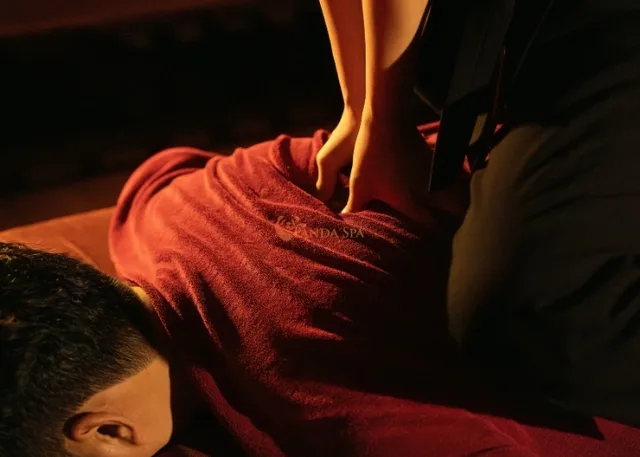
Thanks to this uniformity, technicians do not operate based on belief intuition. They use their trained sense of touch to evaluate muscle fiber density and epidermal temperature, thereby making clinical decisions about the most appropriate pressing force intensity.
3. Origin and History of Shiatsu Massage
To become a global therapeutic standard, this method had to undergo a long-term evolutionary process from traditional medicine to rise to meet evidence-based medical standards.
3.1. Foundation from Japanese Anma and Chinese Tui Na
The origin of Shiatsu has deep roots from "Anma" - a traditional massage system that appeared in Japan from the 14th century. Anma itself is an absorption and variation from the art of "Tui Na" of ancient Chinese medicine.
For hundreds of years, Anma was a popular health care method. However, the surface stroking and rubbing techniques of Anma gradually revealed limitations as they only brought temporary relaxation effects, making it difficult to intervene deeply in complex musculoskeletal syndromes.
3.2. Context of Shiatsu formation in Japan in the early 20th century
A historical turning point occurred during the Meiji period when the Japanese government promoted strong modernization, absorbing the Western medical system. Traditional methods faced the risk of being eliminated if they could not prove their clinical scientific nature.

Under that pressure, the Japanese medical community was forced to purify Anma. They boldly cut off surface rubbing manipulations that did not bring structural changes, only distilling and standardizing the static pressure technique. This was an important transitional period, laying the first foundation stones for Shiatsu.
4. Tokujiro Namikoshi and the Formation of Modern Shiatsu
It would be a big omission to mention this therapy without mentioning Tokujiro Namikoshi (1905–2000) - the famous physician revered as the founder of the modern scientific Shiatsu school.
4.1 The story of curing his mother with finger pressure
The motivation for the birth of the method stemmed from a touching context. When he was 7 years old, the boy Tokujiro and his family migrated to the cold Hokkaido region. The harsh climate caused his mother to suffer from severe rheumatoid arthritis, with pain all over her body.

With a caring instinct, the boy used his hands to massage his mother. Through practical observation, Tokujiro realized that: Using the strength of the thumb to press deeply and keep it still at the swollen joints brought a clear and much longer-lasting pain relief effect compared to just normal rubbing and kneading.
4.2 The process of researching and perfecting the Shiatsu technique
Growing up from family healing experience, Namikoshi spent many years conducting in-depth research on anatomy and neurophysiology of Western medicine. He wanted to encode his personal method into a teachable theoretical system.
In 1940, he founded the Japan Shiatsu College in Tokyo. At this facility, he conducted experimental studies to standardize the quantification of pressing force, calculate finger angles, and map out safe impact regimens, eliminating injury risks for patients.
4.3 Shiatsu was officially recognized in Japan in 1955
It was the strict scientific reasoning system and positive clinical results from the Namikoshi school that convinced Western medical professionals, bringing a folk method to the same level as orthodox medicine.

In 1955, a historical milestone was set when the Japanese Ministry of Health officially licensed and recognized Shiatsu as a legal medical therapy. To this day, practitioners in Japan are all required to undergo anatomy training and take a national certificate exam.
5. Why Was Shiatsu Massage Formed and Developed?
The popularity of Japanese Shiatsu massage beyond national borders is not simply a trend but the result of properly meeting the medical needs of the times.
5.1. Historical and social factors promoting the birth of Shiatsu
In the context of Japan rebuilding its infrastructure after World War II, the health sector faced a scarcity of medicines and supplies. The people urgently needed a highly applicable, easily accessible health care method.

Shiatsu perfectly met that criterion: Requiring no supporting tools, independent of pharmaceuticals, needing only the trained hands of a person. The minimalism in terms of resources helped this method take deep roots in the community health care system.
5.2. Practical value and scientific basis of the method
The enduring vitality of the method lies in the effects of Shiatsu massage bringing clear efficiency. For industrial society, where people work in wrong postures for a long time leading to neck and shoulder muscle pathology, Shiatsu provides a direct and effective physical muscle-releasing mechanism.
Its applicability is so strong that major technology corporations have digitized these acupressure operations to produce high-end Shiatsu massage chairs, serving the home self-care needs of millions of families worldwide.
6. Characteristic Techniques in Shiatsu Massage
The sophistication of this acupressure art lies in controlling vitality. A good specialist operates not based on violent muscle strength.
6.1. The testing and development process of Shiatsu techniques
Musculoskeletal studies indicate that: Strong and sudden pressing force will activate the defensive spasm reflex of the nervous system, making muscles harder and more prone to injury.

Therefore, the technical standard set requires the pressing force to be introduced slowly and steadily. The gradual increase in pressure gives the nervous system time to recognize and adapt, thereby proactively loosening muscle bundles to receive deeper intervention force.
6.2. The combination of traditional medicine and modern anatomy
Different from mechanical massage, the Shiatsu practitioner maximizes the sensitivity of fingertip touch to "listen" to the customer's body. They have the ability to detect differences in skin surface temperature and fascial tissue stiffness to diagnose the condition.
Mastering anatomical knowledge allows them to accurately determine the path of tendons, the arrangement of fascia, and the position of nerves. This ensures the pressing force penetrates the target muscle group without causing injury or compressing blood vessels.
6.3. Characteristics of pressing force, Tsubo points, and therapeutic rhythm
The key point that constitutes a complete answer to what is shiatsu massage is the force transmission mechanism. Specialists do not push force from arm muscles; they keep their arms straight, using the body's center of gravity from the lower abdomen (Dantian) to transmit straight down to the thumb forming a 90-degree right angle.
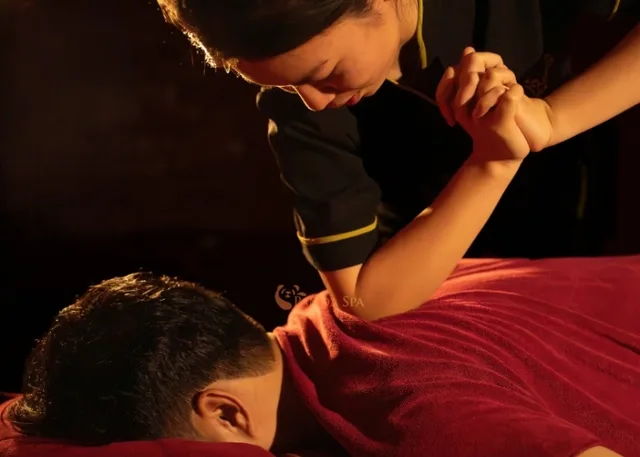
Each press and hold lasts from 3 to 10 seconds, combined with synchronized breathing between the technician and the experiencer. This rhythm not only supports the blood and qi circulation process but also creates a calm meditative state in the mind.
7. Frequently Asked Questions About Shiatsu Massage
From a medical perspective, any physical impact method needs clear indications and contraindications to ensure maximum safety for users.
7.1. Does experiencing Shiatsu pressing force cause pain?
During therapy, when impacting stiff muscle trigger points, you will feel a slight aching. According to physical therapy medicine, this is 'good pain' signaling the muscle-releasing mechanism is being activated. This feeling will turn into relaxation as soon as the technician releases their hand force.
7.2. Which medical cases are contraindicated with this method?
This therapy is strictly contraindicated for people with fractures, severe osteoporosis, open skin wounds, or infectious diseases. Patients with a history of unstable blood pressure, cardiovascular disease, or pregnant women in the first trimester need to consult a medical doctor before doing it.
7.3. What is a reasonable frequency for Shiatsu massage therapy?
For people with chronic neck and shoulder pain due to the nature of their work, maintaining 1-2 times/week in the early stage will support repairing damaged muscle tissue. When the physical condition is balanced, a frequency of 1-2 times/month is ideal to maintain the musculoskeletal system and relieve nerve pressure.
8. Conclusion - About the Origin and Principles of Shiatsu
In summary, deeply understanding the scientific nature of what is shiatsu massage helps us properly evaluate the position of this therapy: Not just a simple form of relaxation, but a physical therapy regimen with a clear anatomical basis, verified through nearly a century in Japan. By combining accurate static pressing force and the principle of clearing meridians, Shiatsu opens a natural self-healing mechanism for the musculoskeletal and nervous systems. If you are looking for a reputable Da Nang Shiatsu massage address, strictly adhering to original techniques to recover physically scientifically, contact Panda Spa immediately for consultation and design of a personalized health care roadmap.
CONTACT NOW
CONTACT NOW
All core contact channels are grouped here so visitors can book or ask quickly.