Người đã xem:
—
Foot Skin Care: Effective Ways for Soft, Smooth, Crack-Free Feet
Thời gian: 02/11/2026
Foot skin care is an important but often overlooked step in daily beauty routine, leading to dry, calloused, and cracked heels that affect appearance. While feet bear the full body weight and endure constant pressure from walking and tight shoes, they age quickly without proper attention. Understanding the causes and applying a scientific foot skin care routine not only improves dryness and cracking but also restores soft, rosy, and healthy heels. Explore simple, effective secrets you can do at home with Panda Spa.
1. Why Foot Skin Easily Dries and Cracks – Needs Care
Unlike facial or hand skin, foot skin has a unique biological structure with a thicker epidermis to protect against friction. However, the sole has no sebaceous glands, meaning it cannot produce oil to retain moisture, making this area very prone to dryness and cracking without external hydration. Therefore, implementing foot skin care steps is essential to maintain elasticity and softness.
- Weight pressure: Standing or walking too much creates great pressure on heels, causing hardening.
- Inappropriate footwear: Tight or open-heel shoes cause excessive friction and dust exposure.
- Weather and environment: Dry climate or air-conditioned settings cause rapid moisture loss through skin.
- Nutrient deficiency: Diet lacking vitamins and zinc also affects foot skin health.
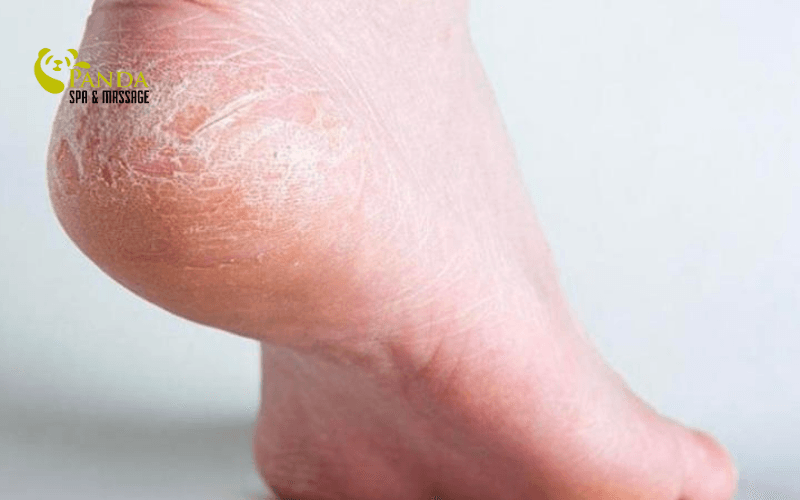
Why Foot Skin Easily Dries and Cracks – Needs Care
If dryness and cracking are ignored for a long time, fissures can penetrate deep into the dermis, causing bleeding and increasing infection risk. This not only causes pain with every step but also severely affects aesthetics, making you hesitant to wear open-heel shoes. Establishing a regular foot skin care habit is the best preventive solution to protect your foot health.
>>> READ MORE:Effective and Safe Ways to Soften Hand Skin at Home
2. Signs That Foot Skin Is Severely Dry and Cracked
Early recognition of damage signs is key to timely and effective treatment. Don’t wait until heels bleed to start worrying—pay attention to even the smallest changes on your feet for appropriate handling.
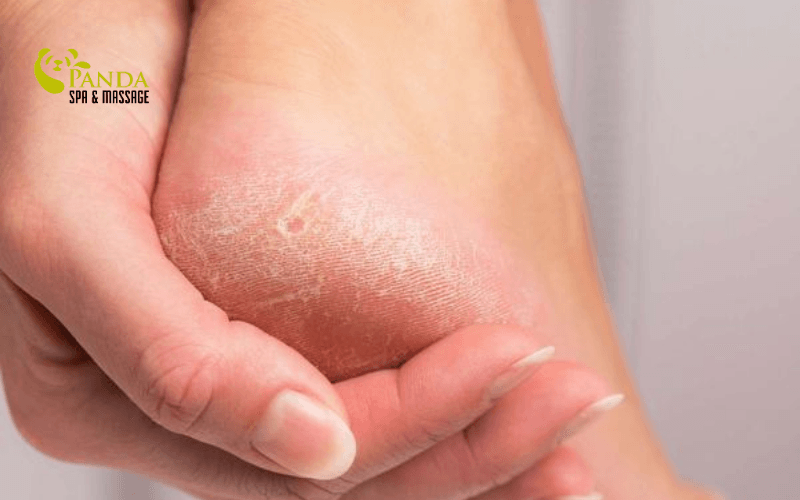
2.1 Cracked heels causing sharp pain when walking
The first and most noticeable sign of insufficient foot skin care is heel skin thickening, hardening, and turning pale yellow. Over time, this thick layer loses elasticity and develops small vertical fissures along the heel edge. When walking, pressure widens these cracks, creating stinging and sharp pain with every step.
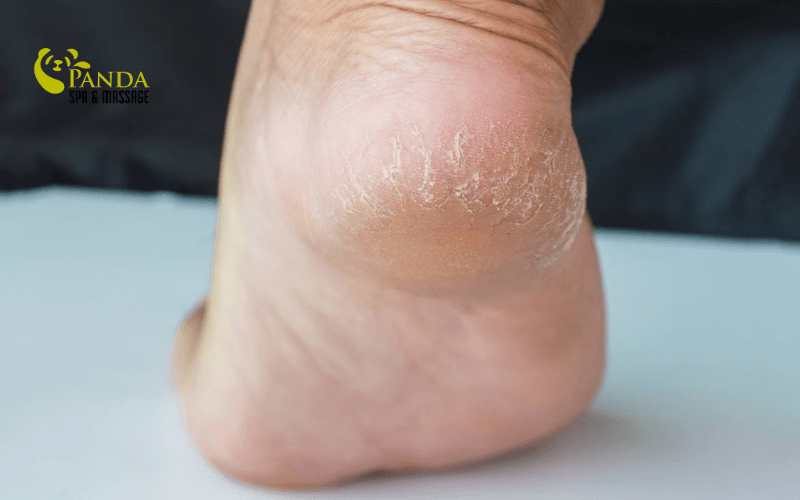
Cracked heels causing sharp pain when walking
This condition often worsens in winter or with frequent soap/water exposure without protection. Without specialized moisturizing creams, cracks deepen, exposing tender skin underneath. This is when you need to seriously review your foot skin care routine to prevent more severe damage.
2.2 White, moldy peeling foot skin affecting appearance
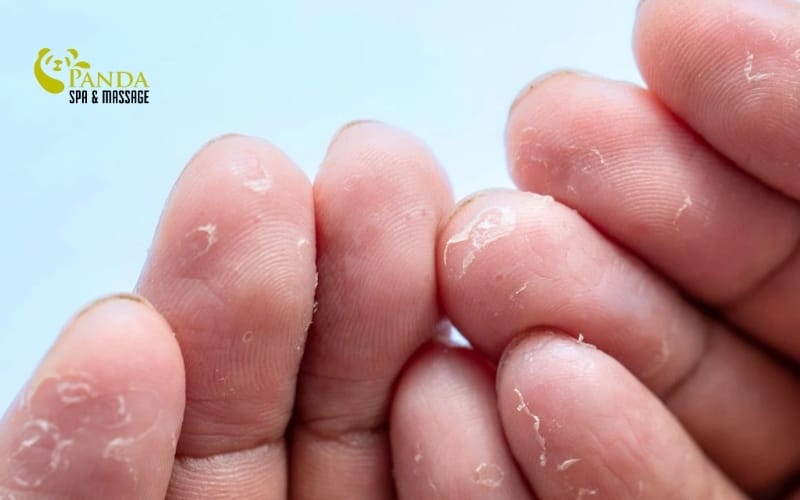
Besides heel cracking, white flaky peeling on feet is a common sign of severe dryness. You may see dead skin peeling off the sole and between toes, forming white moldy patches that look very unaesthetic. This often comes with itching and discomfort, urging you to scratch or peel the skin.
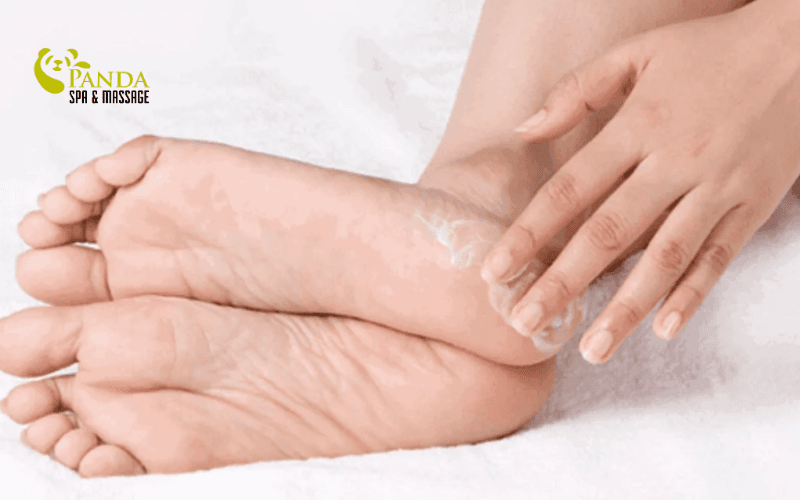
White, moldy peeling foot skin affecting appearance
However, manually peeling damages new skin, causes bleeding, and raises fungal infection risk. This peeling shows severe dehydration and disrupted natural exfoliation. To fix it, combine gentle exfoliation and deep moisturizing in your daily foot skin care routine to remove dead scales and nourish new skin.
2.3 Deep cracks prone to infection
When dryness and cracking are uncontrolled, heel fissures penetrate the mid-dermis, causing bleeding and intense pain. This is the most dangerous stage because these open wounds are ideal entry points for bacteria and fungi. The moist environment inside shoes further promotes microbial growth, leading to inflammation, swelling, and even infection.
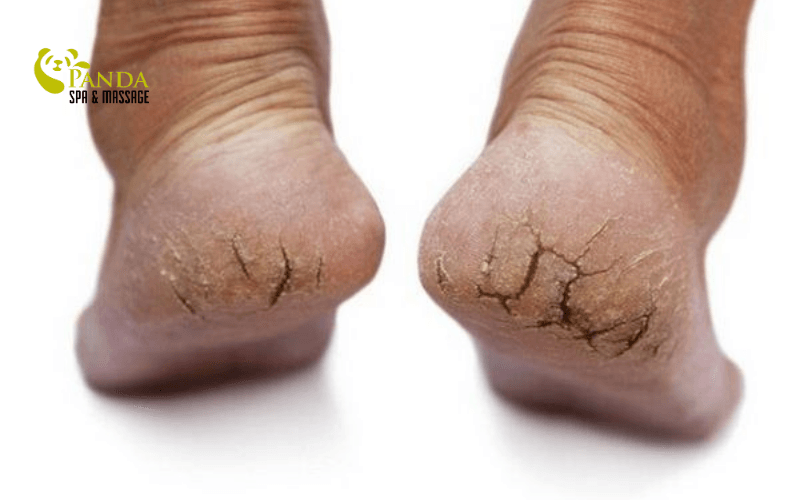
Deep cracks prone to infection
Walking becomes torture at this point, greatly impacting daily life and work. You need antibacterial topical medications and careful wound bandaging. Don’t let your feet reach this alert stage before seeking treatment. Proactively start foot skin care from the first signs of dryness.
3. Standard At-Home Foot Skin Care Routine
You can achieve soft feet right at home if you consistently follow the correct process. Below are basic steps in logical order recommended by experts for quick foot recovery.
3.1 Warm water foot soak, avoid strong soaps
The first step in foot skin care is cleansing dirt and relaxing feet after a long day. Soak feet in warm water (38–40°C) for 10–15 minutes to soften thick calluses. Add sea salt, herbal essential oils, or fresh ginger to enhance antibacterial and circulation benefits.
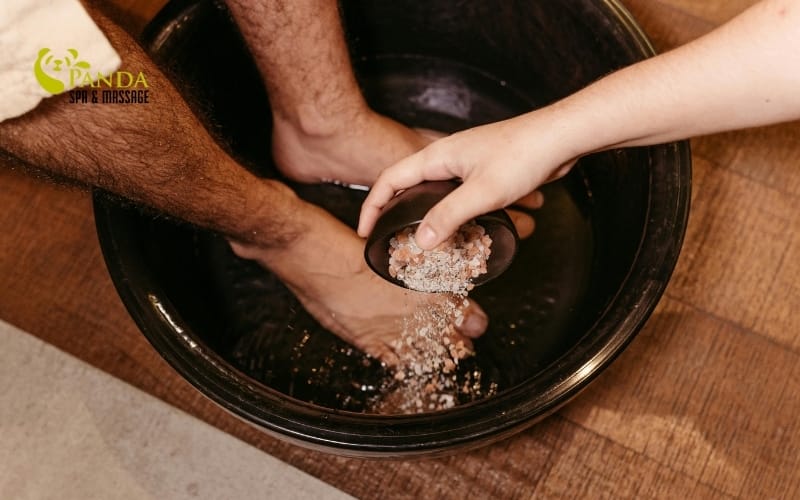
Warm water foot soak, avoid strong soaps
Important note: avoid overly hot water as it dries skin further, and skip strong-detergent soaps. Use mild body wash or specialized foot cleansers with moisturizing ingredients. After soaking, gently pat dry with a soft cotton towel, especially between toes to prevent fungal growth, preparing for next care steps.
3.2 Apply foot cream twice daily
Moisturizing is the golden key to recovering dry, cracked skin. Choose specialized foot creams containing Urea, Lactic Acid, Glycerin, or Shea Butter. These active ingredients penetrate thick heel skin, soften calluses, and provide long-lasting hydration. Applying cream should become an indispensable daily habit.
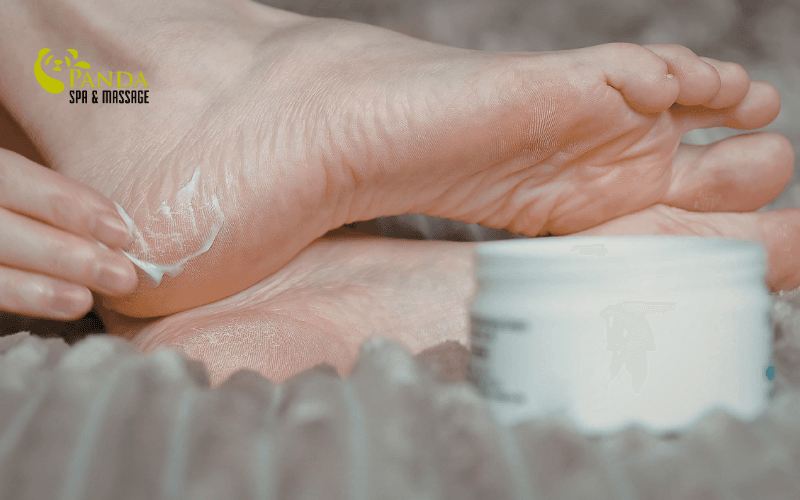
Apply foot cream twice daily
Best time to apply is right after bathing or soaking while skin is still damp to lock in moisture. Apply at least twice daily: morning before wearing shoes and evening before bed. Consistent foot skin care will heal small cracks and restore heel smoothness in just weeks.
3.3 30-second upward massage for deeper cream absorption
Applying cream alone isn’t enough—you need gentle massage to help nutrients penetrate deeper. Spend 30 seconds to 1 minute per foot, using your thumb to lightly press and circle the sole, then stroke upward from toes to ankle. This upward motion supports venous return, reduces swelling after long standing or walking days.
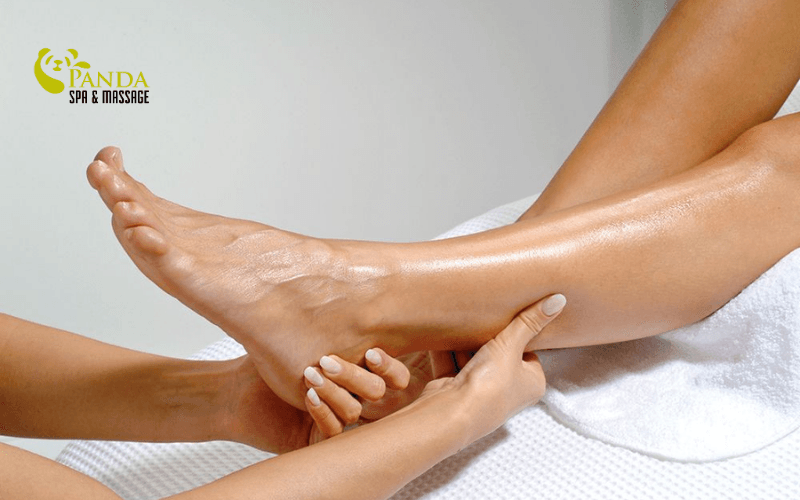
30-second upward massage for deeper cream absorption
Massage also relaxes tired muscles, bringing comfort and better sleep. If possible, visit reputable Da Nang spas for professional foot acupressure. Combining skin care with therapeutic massage elevates your foot skin care routine to a new level.
>>> READ MORE:Peeling Hand Skin: Causes and Quick Recovery Methods
4. Natural Secrets for Soft, Smooth Foot Skin
Besides commercial products, use readily available natural ingredients in your kitchen to nourish feet. These methods are safe, economical, and surprisingly effective when applied consistently.
4.1 Sugar and oatmeal weekly exfoliation
Exfoliation is crucial to remove thick dead skin, allowing new skin regeneration. Make a homemade mix of brown sugar, oatmeal powder, and olive oil. Sugar acts as physical scrub particles, while oatmeal soothes and reduces irritation.

Sugar and oatmeal weekly exfoliation
Gently massage this mixture on wet feet for about 5 minutes, focusing on heels and ankles, then rinse off. Removing dead skin makes subsequent moisturizers absorb much better. Perform exfoliation 1–2 times weekly to maintain smooth feet. Always apply moisturizer afterward to complete your foot skin care routine.
4.2 Honey and lemon foot mask for softening
Honey-lemon mixture is a perfect mask for rough feet. Honey is antibacterial and moisturizing, while lemon’s natural acid softens calluses and brightens skin. Mix one spoon of honey with a few drops of lemon juice, apply to feet, leave for 15–20 minutes, then rinse with warm water.
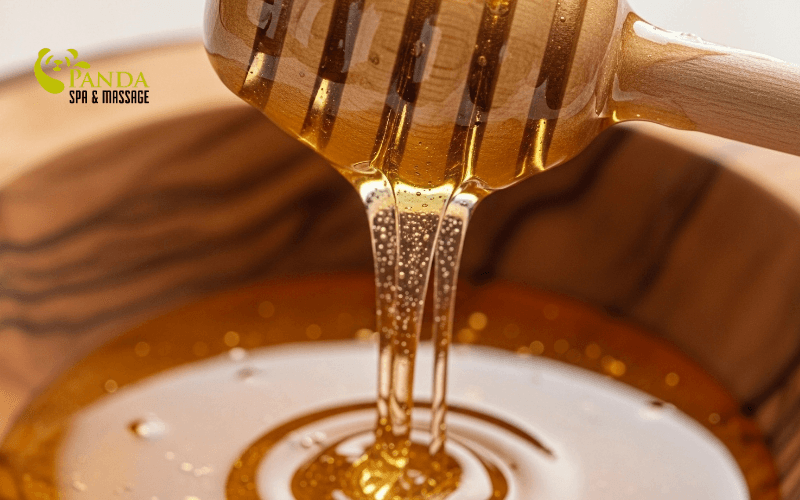
Honey and lemon foot mask for softening
This method not only softens hardened areas but also effectively deodorizes feet thanks to lemon’s antibacterial property. Avoid if feet have open painful cracks. Apply 2–3 times weekly for brighter, softer foot skin. This is one of the most loved natural foot skin care methods among many women.
4.3 Warm coconut oil overnight foot massage for moisture lock
Coconut oil is a “miracle” natural moisturizer rich in Vitamin E and fatty acids. Before bed, warm a small amount in your palm and massage evenly over entire feet, focusing on cracked heels. Warm coconut oil penetrates deep into epidermis, softening calluses and providing natural antibacterial protection.
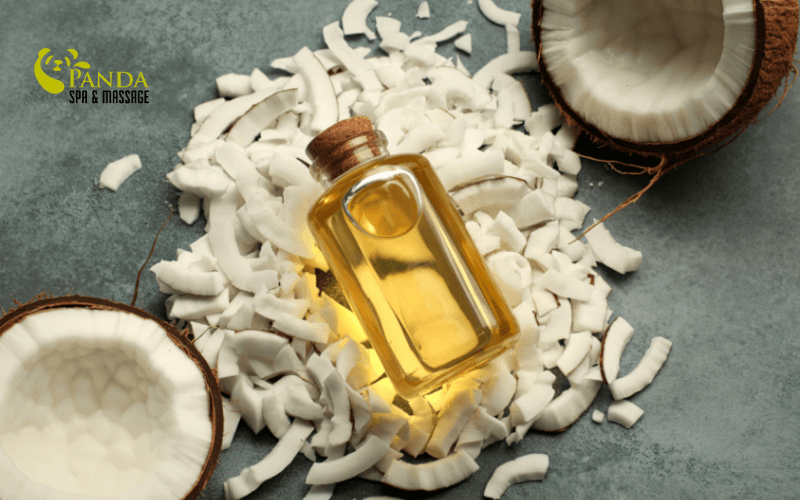
Warm coconut oil overnight foot massage for moisture lock
For enhanced moisture lock, wear thin cotton socks after applying. Socks retain heat, create a moist environment for better oil action, and prevent oil transfer to bedding. Wake up to noticeably softer feet. This is an extremely simple yet highly effective foot skin care tip for those with chronic dry skin.
>>> READ MORE:Dry Hand Skin: Causes and Effective Recovery Methods
5. Foot Skin Care Treatments at Panda Spa
If you lack time for home care or cracking has become severe, seek professional solutions. At reputable Da Nang Spa Panda Spa, we offer intensive foot care treatments combining herbal foot soaks, exfoliation, and hot paraffin wrap.
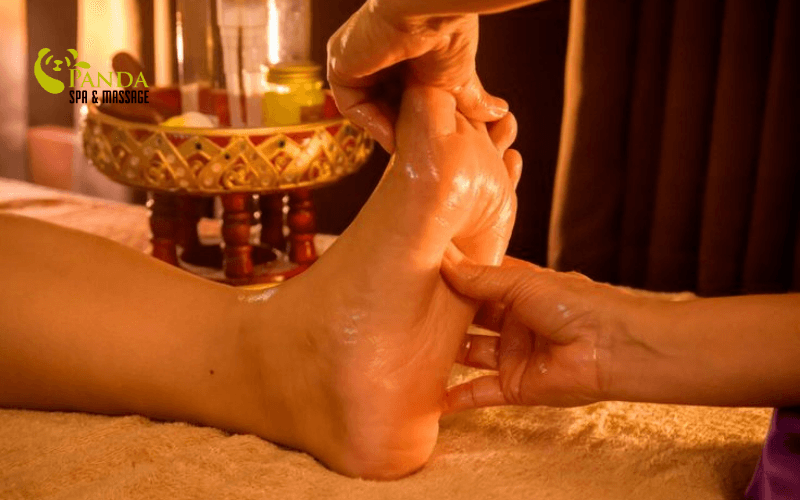
Foot Skin Care Treatments at Panda Spa
Paraffin wrap is an excellent therapy to instantly soften skin, relieve joint pain, and boost circulation. Warm paraffin envelops feet, driving nutrients deep into every epidermal layer, healing cracks and restoring immediate softness. Combined with skilled acupressure massage, Panda Spa promises a perfect foot skin care experience, helping you relax and fully restore foot health.
6. FAQ – Common Questions About Foot Skin Care
During foot skin care, many still wonder about product choices, handling cracked heels, or correct home foot soaking methods. Below are the most common questions with detailed answers to help you care for your feet more effectively and safely.
1. Can body lotion be used on feet?
Yes, but less effective than specialized foot cream. Foot skin is much thicker than body skin, so it needs thicker creams with higher Urea or Lactic Acid concentrations to soften calluses.
2. Why do heels still crack despite regular cream application?
Possibly because thick dead skin blocks cream absorption, or due to vitamin deficiency and low water intake. Combine periodic gentle exfoliation, review diet, and choose stronger treatment creams for your foot skin care routine.
3. Does salt water foot soak dry out skin?
Salt water has good antibacterial properties, but prolonged or overly concentrated soaks can dehydrate skin. Limit to 10–15 minutes, rinse with clean water afterward, and immediately apply moisturizer to balance hydration.
7. Conclusion: Daily Foot Skin Care
Having rosy, smooth heels is not difficult if you apply scientific foot skin care methods consistently. Don’t let rough feet reduce your confidence or affect your health. Start pampering your feet today with the smallest habits. For intensive, premium support and relaxation, don’t hesitate to visit Panda Spa for the most dedicated foot care by our expert team.
>>> READ MORE: Hand Allergy: Causes and Safe Treatment Methods
———————————————————————
CONTACT NOW
Hotline: 038.3967.775 / 070.818.5397
Email: booking@pandaspa.vn
Messenger: Panda Spa Da Nang
Kakao Talk: Panda Spa Da Nang
Naver: Panda Spa Da Nang
Tripadvisor: Panda Spa & Massage In Danang City
Address 1: 229 Nguyen Van Thoai, Son Tra – Da Nang
Address 2: 225 Nguyen Van Thoai, Son Tra – Da Nang