Người đã xem:
—
Peeling Hand Skin: Causes and Quick Recovery Methods
Thời gian: 02/09/2026
Peeling hand skin is a common condition causing flaking, dryness, and cracking, especially during weather changes or frequent chemical exposure. If not treated promptly, damaged skin can become severely weakened, causing pain and affecting daily activities. In this article, Panda Spa helps you understand the root causes and guides proper hand skin recovery to restore natural softness and health.
1. What Is Peeling Hand Skin and Why Is It So Common?
Before diving into remedies, we need to understand the nature of hand peeling. To know why skin peels, first recognize the biological features that make hand skin more “vulnerable” than other areas.
1.1 Why hand skin is more prone to damage than other areas
Compared to facial or body skin, hand skin has a unique structure with **very few sebaceous glands** on the back and **none** on the palm. This results in a lack of natural protective oil, making moisture retention much weaker than other body parts. This inherent deficiency makes hand skin easily damaged and prone to peeling under adverse conditions.
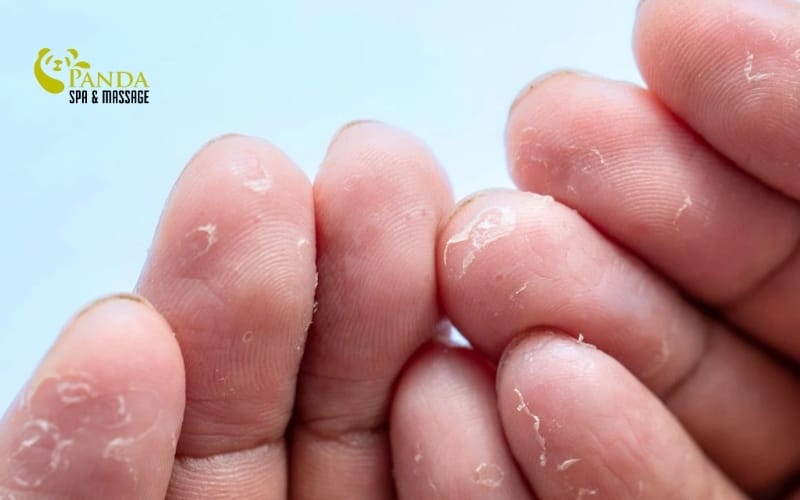
Why hand skin is more prone to damage than other areas
Moreover, hands are constantly in use at high frequency and directly contact everything—from germ-covered keyboards to strong detergents. Continuous friction combined with internal moisture deficiency keeps hand skin in a constant “red alert” state. Therefore, caring for and protecting hands to prevent **peeling hand skin** must be done more frequently and thoroughly than any other body part.
1.2 Dehydration mechanism causing layer-by-layer peeling
Our skin always needs a certain amount of water to maintain elasticity and cell adhesion. When hand peeling occurs, it means the natural hydration process has been seriously disrupted. Water in skin layers evaporates outward faster than the body can supply it, causing keratin cells to shrink, harden, and detach from each other.
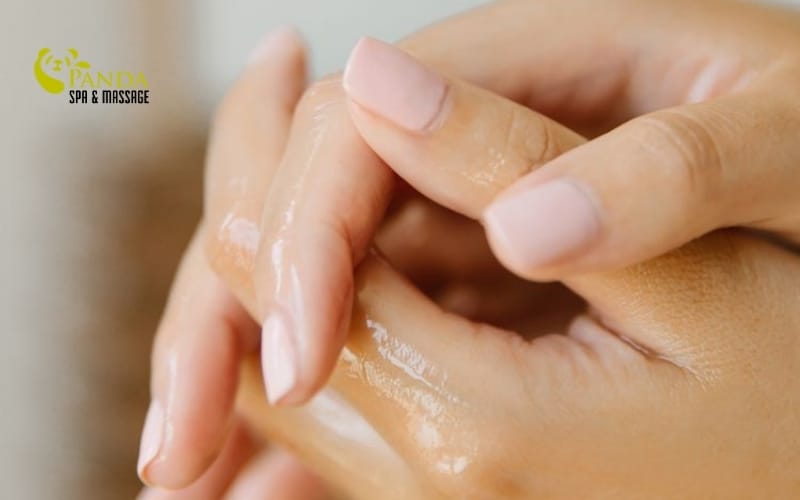
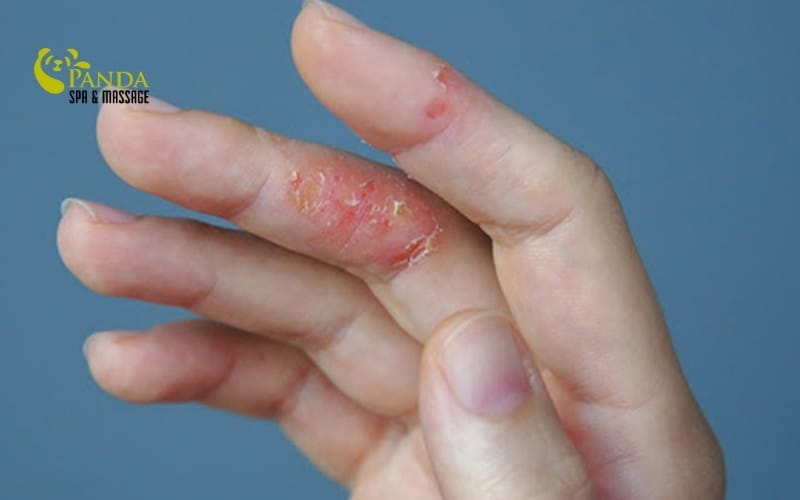
Dehydration mechanism causing layer-by-layer peeling
This usually starts with tiny, barely visible cracks, then spreads into larger white, dead skin flakes. Without prompt moisture replenishment to stop dehydration, **peeling hand skin** will spread from fingertips to the palm, creating a sandpaper-like roughness with every touch.
1.3 Weakened skin barrier leading to dryness and peeling
The lipid layer on the skin surface acts as a strong defensive wall, blocking bacteria and locking in moisture. When this barrier weakens or is destroyed by physical or chemical factors, skin loses self-protection ability. As a result, it becomes extremely sensitive, easily irritated, and peels off the epidermis as a mechanism to shed damaged layers for new ones.
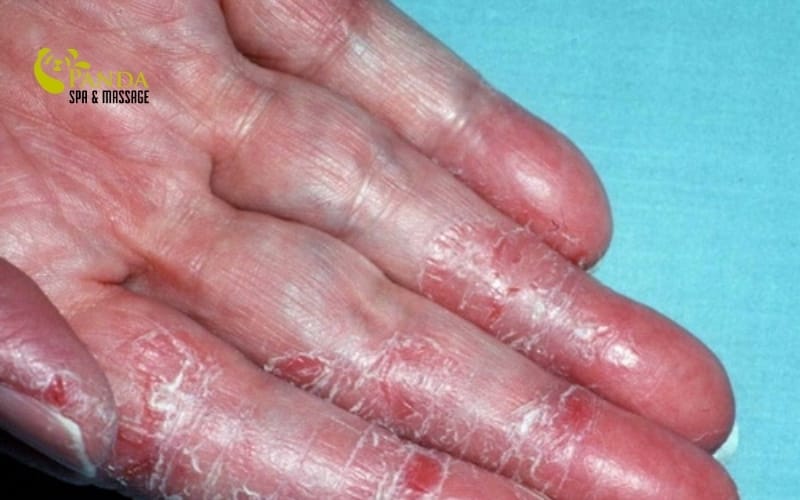
Weakened skin barrier leading to dryness and peeling
Barrier weakening doesn’t happen overnight—it’s the result of long-term accumulation. It may start with mild tightness, then progress to intense itching and heavy peeling. Restoring this protective barrier is the top priority in any treatment for dry, cracked skin to prevent recurrence.
2. Common Causes of Peeling Hand Skin Today
To completely eliminate peeling, accurately identify the “culprits”. There are many causes, from external environmental factors to internal health issues.
2.1 Dry weather causes rapid moisture loss
In winter or dry seasons, air humidity drops dramatically. Dry air pulls moisture from your skin to balance itself, making hands dry and cracked quickly. This is the most common seasonal cause of peeling hand skin that almost everyone experiences at least once.
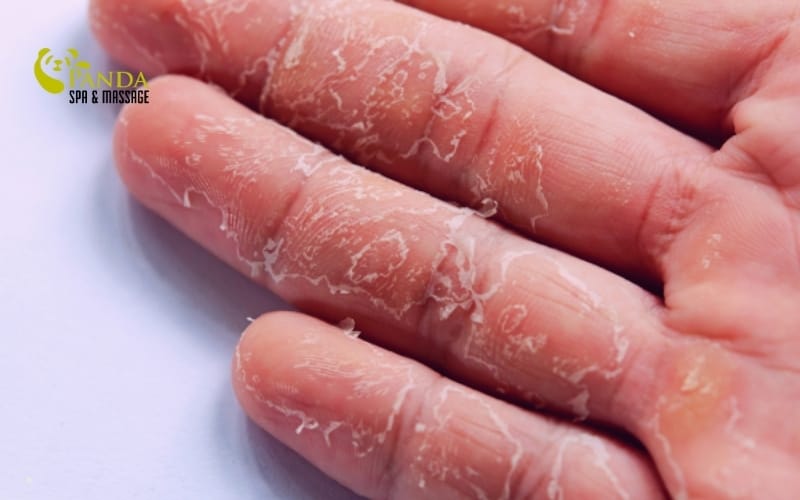
Dry weather causes rapid moisture loss
Temperature differences between indoors and outdoors shock the skin, constricting capillaries and reducing nourishment. Without adequate nutrients and moisture in harsh weather, cell bonds break, leading to flaking. To address **peeling hand skin** due to weather, intense moisturizing and warmth are essential.
2.2 Chemicals and soaps erode natural oils
Daily life exposes hands to dish soap, laundry detergent, floor cleaner—even antibacterial hand soap with high cleansing power. These contain high alkali and synthetic fragrances that remove grease but also strip away the **protective oil layer** on hands. This is the most direct and destructive cause of peeling and contact dermatitis.
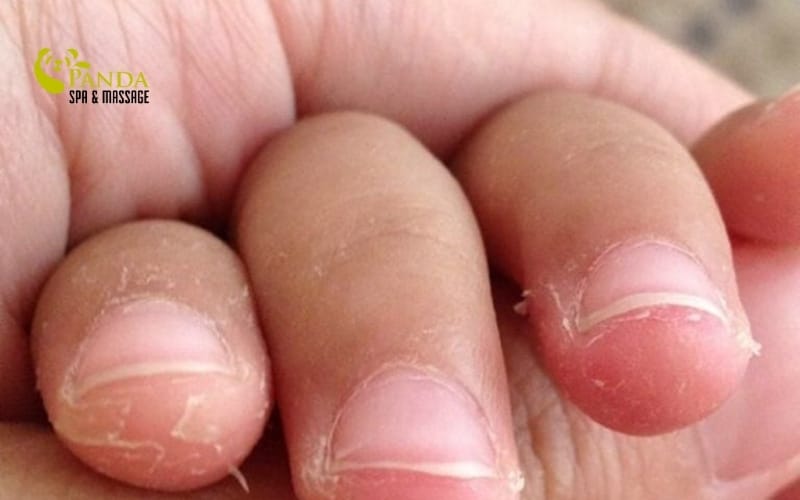
Chemicals and soaps erode natural oils
Many skip gloves during chores because they feel cumbersome, but this habit gradually destroys hands. Chemicals don’t just peel the surface—they penetrate deeper, damaging new cells. If your hands peel right after washing or cleaning, review your detergents and start protecting skin immediately.
2.3 Nutrient deficiency weakens skin leading to peeling
Skin health directly reflects body nutrition. Deficiency in key vitamins like A, C, E, and B-group (especially B3, B7) slows skin regeneration. Nutrient-deficient skin becomes weak, dry, dull, and peels in large patches—a sign of internal-origin **peeling hand skin**.
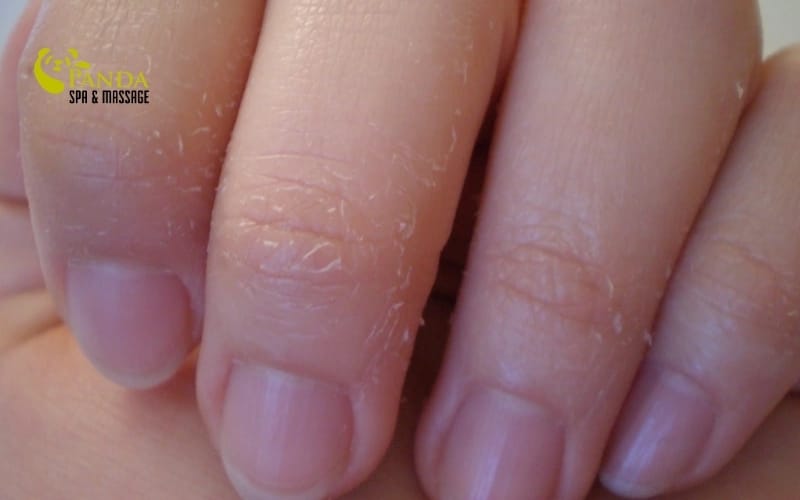
Nutrient deficiency weakens skin leading to peeling
Drinking too little water worsens this. Water is the solvent transporting nutrients to skin and maintaining moisture. Dehydrated body shows first in hands. To permanently fix **peeling hand skin**, combine external moisturizing with internal nutrition through a scientific diet.
2.4 Excessive hand washing prevents skin recovery
Hygiene is good, but washing hands too often—especially with hot water and strong antibacterial soap—is a double-edged sword. Each wash removes the natural moisture barrier. Without immediate re-moisturizing, skin stays chronically dry with no time to rebuild oils, leading to peeling.
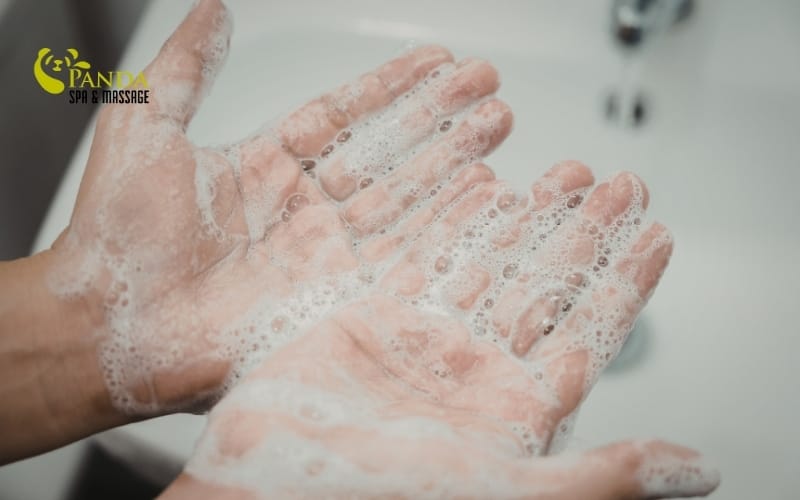
Excessive hand washing prevents skin recovery
This is common among homemakers, healthcare workers, or overly hygiene-conscious people. Prolonged water immersion wrinkles skin, softens epidermis, and makes it peel easily with light friction. To limit this, adjust washing frequency reasonably and always carry hand cream to apply right after water contact.
3. Signs to Recognize Mild vs. Severe Peeling Hand Skin
Not all peeling is the same. Identifying severity helps choose appropriate treatment, avoiding underestimating or over-worrying.
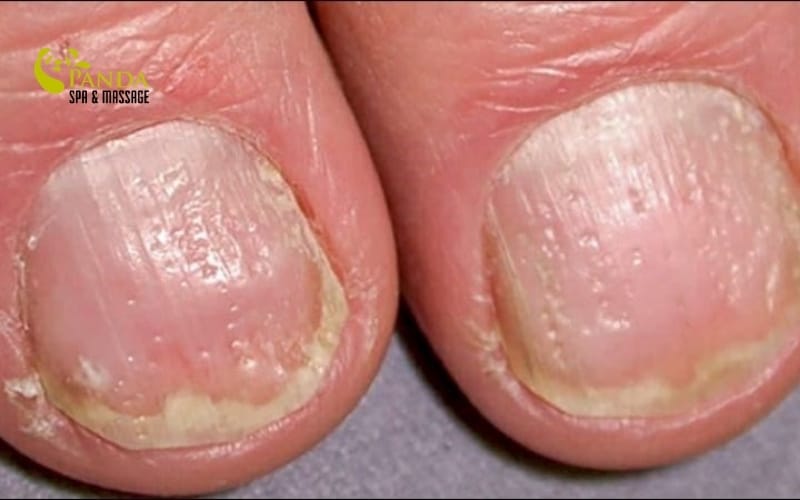
3.1 Thin flakes with prolonged tightness and dryness
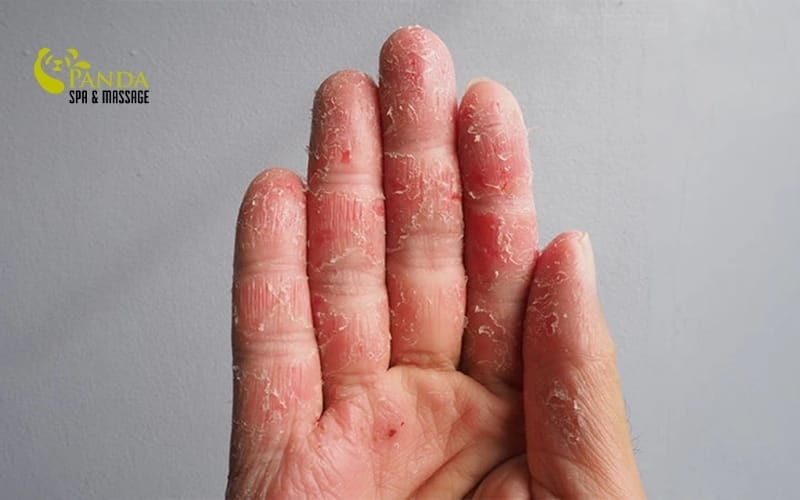
In mild cases, hands feel tight and rough. Surface shows thin white flakes, small or peeling lightly at fingertips. This is the early sign of dehydration and minor epidermal damage. Mild peeling usually isn’t painful but affects appearance and comfort.
Thin flakes with prolonged tightness and dryness
Prompt moisture at this stage recovers skin quickly in days. Ignoring it causes more flaking, spreading across hands and worsening. Never overlook initial tightness—it’s skin crying for help before **peeling hand skin** becomes severe.
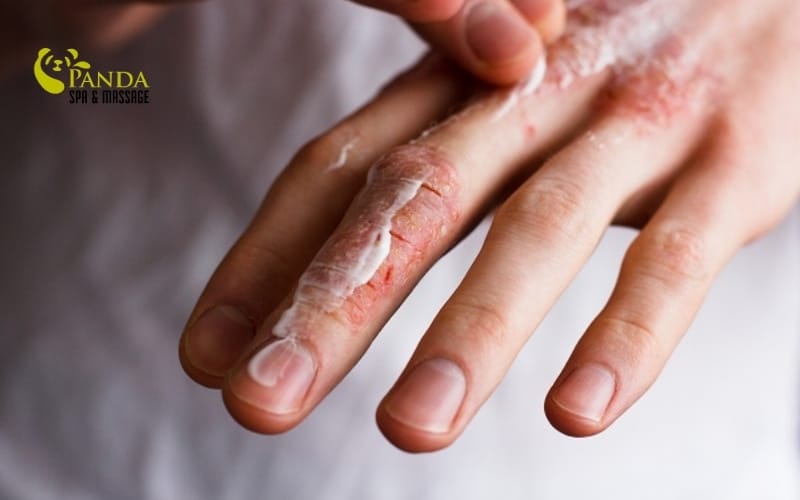
3.2 Deep cracks causing sharp pain and bleeding
Untreated prolonged peeling leads to complete elasticity loss and cracking. These deep fissures (heel cracks, finger cracks) penetrate dermis, causing intense pain with finger movement or water/chemical contact. This is moderate to severe peeling, greatly impacting daily life.
Deep cracks causing sharp pain and bleeding
Worse, deep cracks ooze blood, opening doors for bacteria and infection. At this stage, regular cream may sting and be less effective. Need intensive recovery and strict wound protection. Cracked, bleeding peeling requires patience and proper medical care to heal.
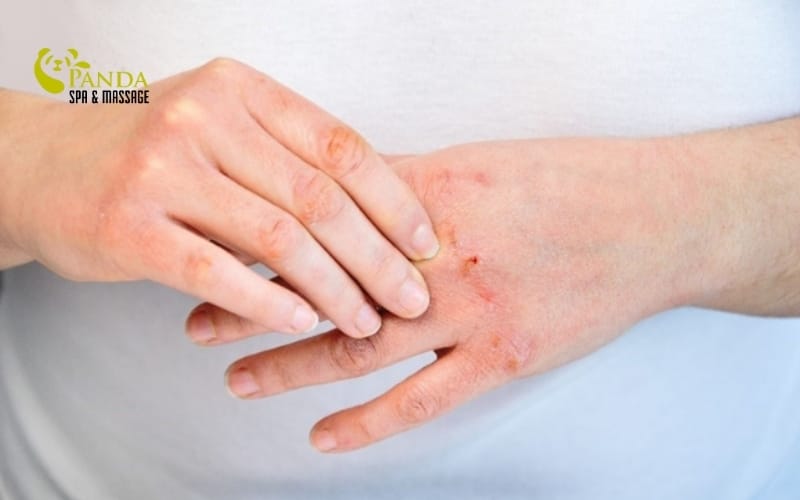
3.3 Prolonged redness, itching with risk of irritation/inflammation
If peeling accompanies redness, swelling, blisters, and intense itching, it may be dermatological conditions like eczema, atopic dermatitis, or fungal infection. Here, peeling isn’t just dryness but immune inflammatory response.
Prolonged redness, itching with risk of irritation/inflammation
Scratching worsens damage, thickening skin, darkening, and forming thick peeling patches (lichenification). In such cases, never self-medicate—see a dermatologist. Professional treatments at Da Nang Massage Panda Spa can soothe skin, but require careful consultation to avoid worsening **peeling hand skin** from pathology.
4. Proper At-Home Treatment Process for Peeling Hand Skin
Once causes and severity are identified, establish a scientific home routine to recover damaged skin. Persistence and correct execution are key to soft, healthy hands again.
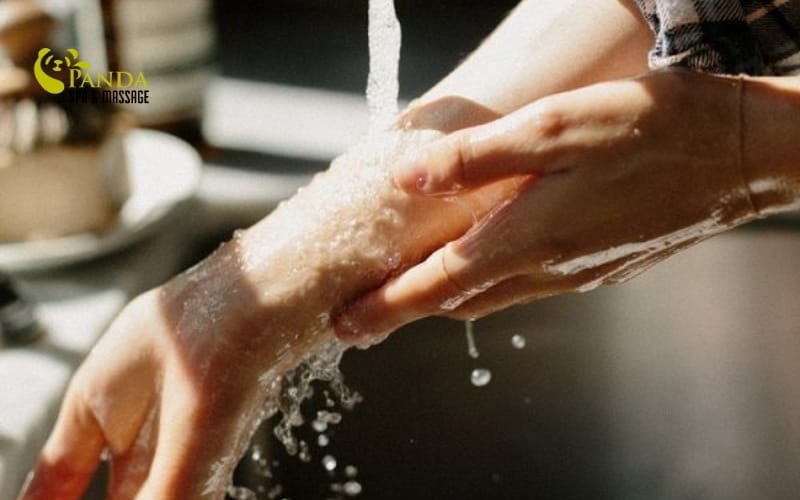
4.1 Gentle cleansing to maintain natural moisture balance
Change cleansing habits is the first step in treatment. Stop using harsh soaps and switch to mild, fragrance-free, pH 5.5 balanced hand washes. Wash with **cool or lukewarm water**, never hot as it worsens peeling.
Gentle cleansing to maintain natural moisture balance
Pat dry gently with soft cotton towel—never rub to avoid more peeling. Use saline if there are open cracks to prevent infection. Keep hands clean yet moisturized is the foundation for subsequent recovery steps to work on **peeling hand skin**.
4.2 Multi-layer moisturizing to restore skin barrier
For peeling hands, one thin cream layer isn’t enough. Use **layering technique**. First apply hydrating serum (Hyaluronic Acid) or aloe gel for instant cell hydration. Then layer thick treatment cream with Urea, Ceramide, or B5 to soothe and repair barrier, quickly reduce dryness/cracking.
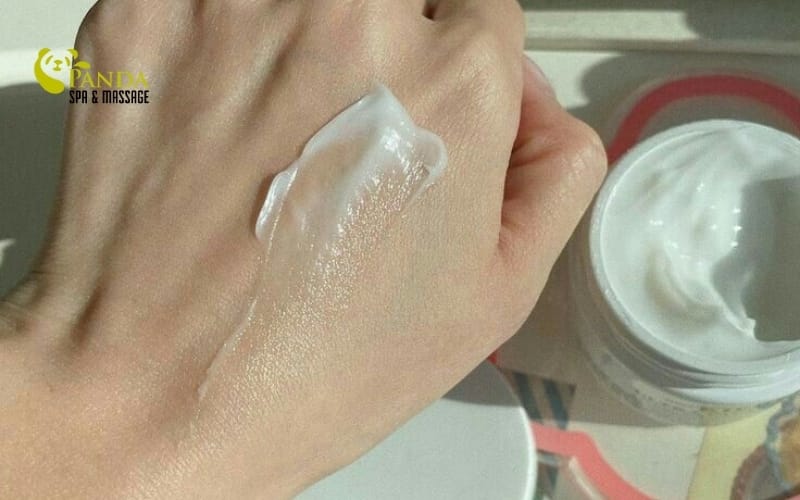
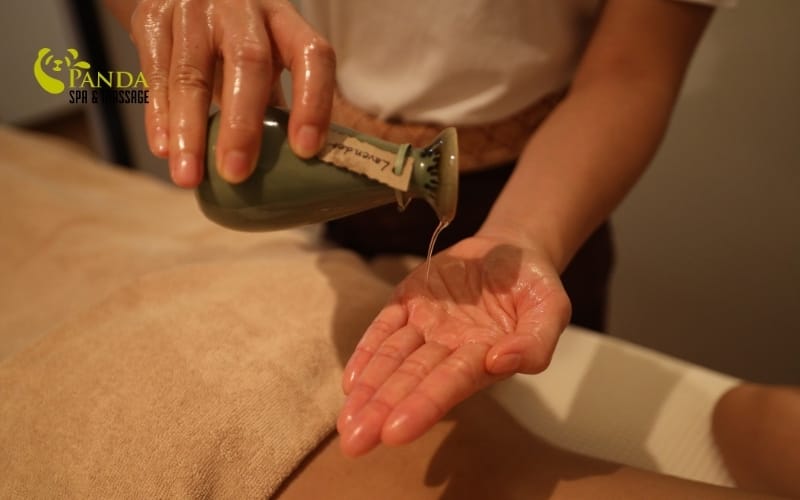
Multi-layer moisturizing to restore skin barrier
Always carry cream and reapply after every wash or whenever dry. Don’t wait for cracks. Continuous 24/7 moisture re-bonds peeling keratin cells, softens surface, stops deeper fissures. This is the primary rescue for **peeling hand skin**.
>>> READ MORE:Effective and Safe Ways to Soften Hand Skin at Home
4.3 Overnight occlusion for enhanced skin regeneration
Night is prime regeneration time. Use it for intensive hand treatment: after regular moisturizing, apply thick natural oil (coconut, olive) or petroleum jelly over entire hand, focusing creases.
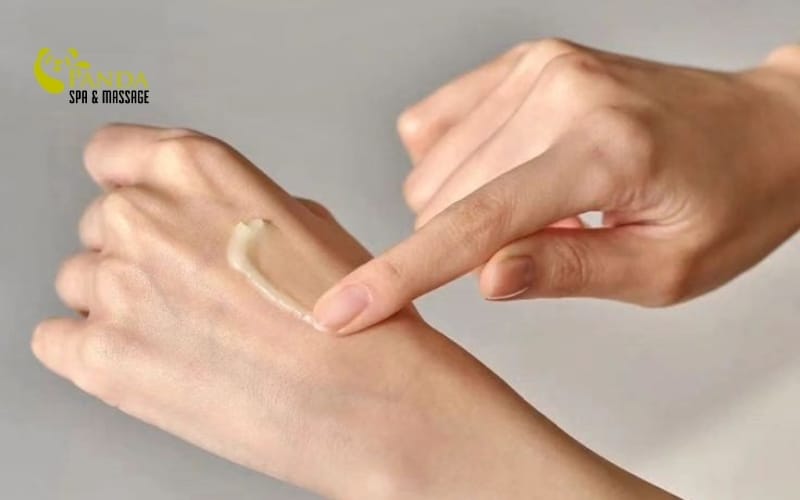
Overnight occlusion for enhanced skin regeneration
Wear thin **cotton gloves** to sleep. Gloves retain heat, create greenhouse effect opening pores for deeper nutrient penetration, prevent cream transfer. Wake up to noticeable change: dead skin softens, new skin regenerates, **peeling hand skin** significantly reduced.
4.4 Hand massage stimulates circulation and elasticity
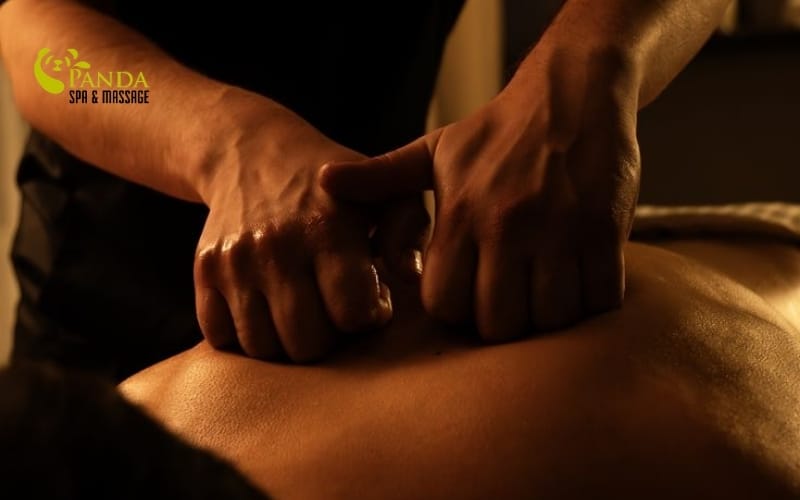
Gentle massage during cream application helps nutrients absorb faster and boosts blood flow to nourish skin. Use thumb to lightly press palm, stroke along fingers to improve circulation to peeling-prone fingertips. Massage also relaxes hand muscles, reduces joint soreness. Always be gentle—avoid strong friction on damaged areas to prevent more pain.
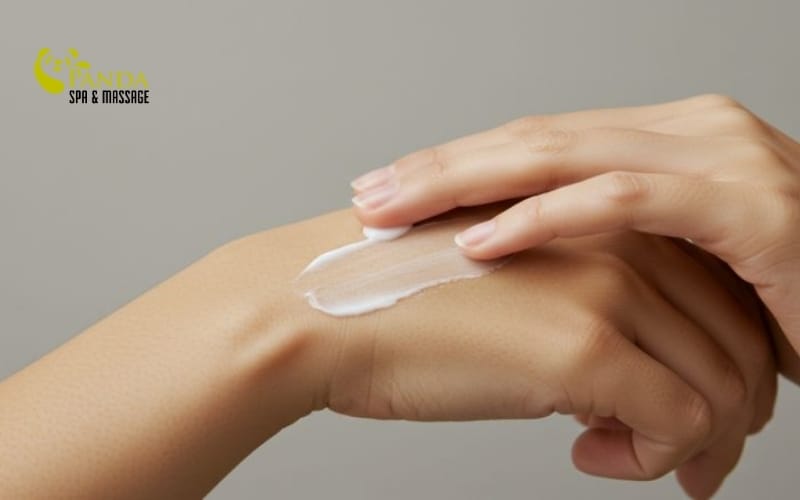
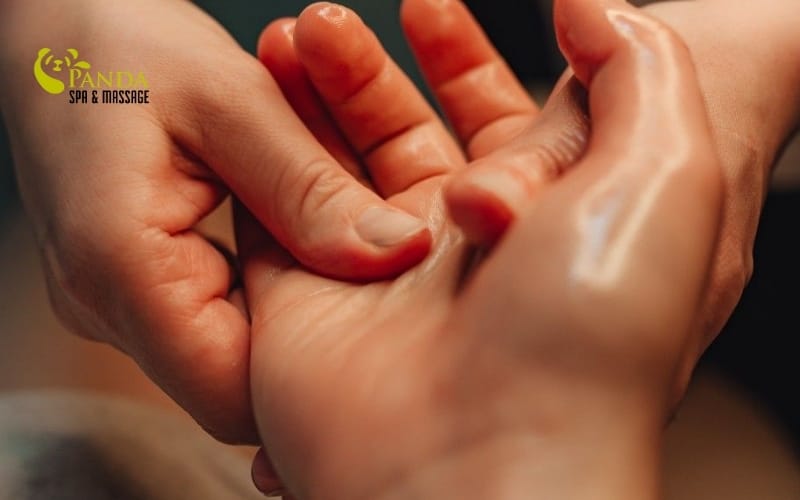
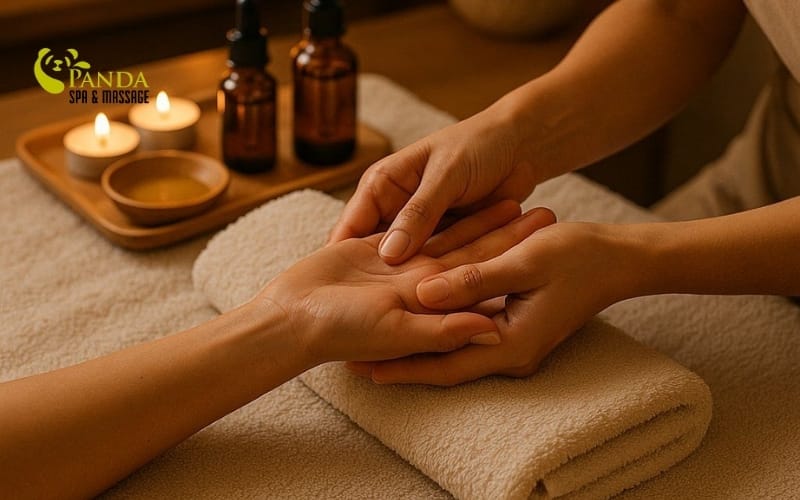
Hand massage stimulates circulation and elasticity
At Da Nang Spa Panda Spa, we combine hand massage with therapeutic essential oils, multiplying recovery effectiveness compared to home massage. If home care doesn’t improve after a while, professional help is necessary to end **peeling hand skin** worries.
5. When to Treat Peeling Hand Skin at Da Nang Spa
If persistent home care fails and **peeling hand skin** continues—especially with deep cracks, sharp pain, or bleeding—it signals severely weakened barrier. Skin loses self-recovery ability; wrong continued treatment may spread damage and raise infection risk.
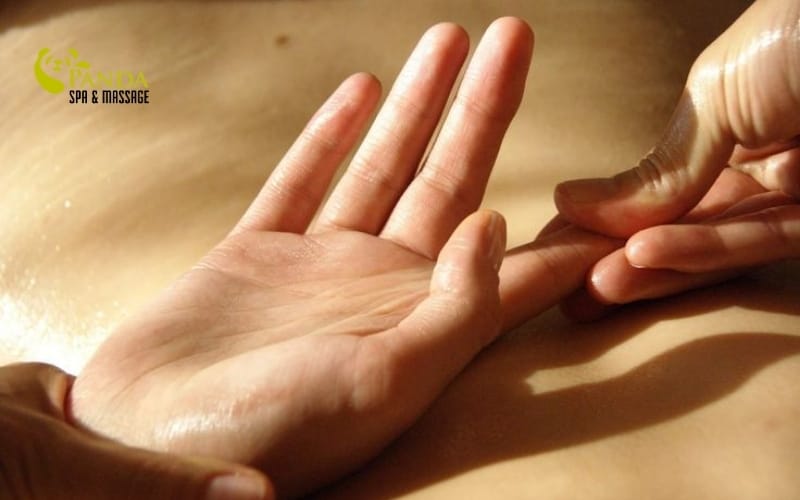
When to Treat Peeling Hand Skin at Da Nang Spa
At this point, professional intervention at **Da Nang Spa** is appropriate. Panda Spa treatments like hot paraffin wrap, iontophoresis recovery essence, and circulation-boosting massage quickly soothe skin, promote cell regeneration, and markedly improve **peeling hand skin**, delivering long-lasting soft, healthy hands.
6. FAQ About Common Peeling Hand Skin Issues
To help you better understand **peeling hand skin**, here are frequent questions and detailed expert answers:
1. Is peeling hand skin due to vitamin C deficiency?
Vitamin C deficiency is one cause, but not the only. Lack of A, E, B vitamins also causes dryness. However, main causes are usually environmental and chemical exposure.
2. Is peeling hand skin contagious?
If due to dryness, weather allergy, or chemicals—no. But if from fungal infection or scabies—yes, via direct contact. Identify cause to prevent spread.
3. Should I peel off the flaking skin?
Absolutely not. Manually peeling or tearing damages underlying new skin, causes bleeding, pain, and infection risk. Let it shed naturally or carefully trim loose parts with small scissors.
7. Conclusion: Effective Ways to Handle Peeling Hand Skin
Peeling hand skin isn’t life-threatening but greatly affects quality of life and confidence. By understanding causes and persistently applying correct care, you can completely overcome it. Start protecting your hands today with small habits. For fast, intensive recovery, don’t hesitate to visit Panda Spa for dedicated consultation and care.
>>> READ MORE:Safe and Effective Ways to Prevent Hand Wrinkles
———————————————————————
CONTACT NOW
Hotline: 038.3967.775 / 070.818.5397
Email: booking@pandaspa.vn
Messenger: Panda Spa Da Nang
Kakao Talk: Panda Spa Da Nang
Naver: Panda Spa Da Nang
Tripadvisor: Panda Spa & Massage In Danang City
Address 1: 229 Nguyen Van Thoai, Son Tra – Da Nang
Address 2: 225 Nguyen Van Thoai, Son Tra – Da Nang
Older post
Next