Table of Contents≡
CONTACT NOW
Constantly cold and numb feet are warning signs of poor circulation. Properly applying foot massage for blood circulation will support increasing peripheral circulation, creating a local warming sensation, and contributing to improving blood flow to the lower limbs. Below, therapists from Panda Spa will share a scientifically standard at-home foot massage procedure to help you self-recover your energy in the safest way.
1. Signs recognizing the lower limb circulatory system is stagnant
To recognize whether your vascular system is operating smoothly or experiencing stagnation, the body will always emit very clear biological signals. Understanding these signs will help you proactively devise timely treatment plans. The feet are located furthest from the heart and bear great pressure from gravity, so this is the first place to manifest signs of circulatory blockage. Below are the specific manifestations that you need to pay attention to.
1.1. Numbness and tingling feeling in the fingertips

The most common manifestation is a tingling sensation like thousands of ants crawling in the toes. This is a direct consequence of small blood vessels being compressed, not supplying enough oxygen and nutrients necessary to nourish peripheral nerve fibers. Applying proper numbness relief foot massage can support improving peripheral circulation and contribute to reducing numbness in some cases.
1.2. Cold feet phenomenon due to poor circulation
Even when you are in a warm weather environment or covered with a thick blanket, your feet can still be freezing cold. Blood flow carries heat to warm the body. When the blood flow transferring to the lower limbs decreases, the legs will lose their main heat-retaining source, causing prolonged uncomfortable freezing coldness.
1.3. Swelling and heavy feet at the end of the day

If you feel the ankle and instep areas are swollen, and wearing shoes feels tighter at the end of the day, that is an alarm signal. This sign indicates that venous blood and lymphatic fluid are stagnating due to gravity; the venous valve system is not strong enough to circulate the reverse blood flow back to the heart effectively.
1.4. Muscles tire quickly and have night cramps
When just walking a short distance, your calves already feel stiff, achy, or you often suffer from cramping spasms at night. Early recognition of these symptoms is an important basis for you to start applying foot massage for blood circulation, thereby clearing blockages and improving endurance for the movement system.
2. Practical steps on how to do foot massage for blood circulation
To fundamentally solve the above stagnation signs, you should perform centripetal massage sequences (stroking from the limb tips to the limb roots) regularly. This sequence excellently supports the venous valve system in improving blood circulation in the legs. A practical treatment of 15 to 20 minutes every evening below will bring you light and warm feet.
2.1. Step 1: Open the superficial blood vessel network
Start by applying a warm essential oil (like ginger oil, cinnamon oil, or coconut oil) to the entire instep. Use both thumbs to apply moderate firm pressure, stroking along the bone grooves between the toes, directing the force upward to the ankle. Be patient and perform this stroking continuously about 15 times.

Friction from the hands combined with essential oil will create a localized warming sensation, supporting an increase in peripheral circulatory circulation and perfectly preparing the muscular system for deeper blood circulation boosting foot massage operations in the next step.
2.2. Step 2: Relieve tension in the sole area
The sole is the area bearing the greatest pressure. To practice foot massage for blood circulation here, use one hand to firmly hold the instep as a fulcrum. Use the heel of your hand or overlap the two thumbs of your other hand to increase the pressing force. Start stroking strongly in a long line from the fleshy pads of the toes, pulling straight down to the end of the heel pad area.
This deep pressing stroke helps relax the plantar fascia area that is stiff due to walking a lot, thereby supporting the improvement of local blood flow, contributing to reducing the feeling of stiffness and discomfort in the soles of the feet.
2.3. Step 3: Pressing Yongquan acupoint supports relaxation
To locate it, slightly bend your toes; the acupoint lies in the deepest depression at the upper 1/3 position of the sole. Use your thumb tip to firmly press a perpendicular force into this position. Hold the pressing force for 3 to 5 seconds then release very gently, repeating about 3-5 times.
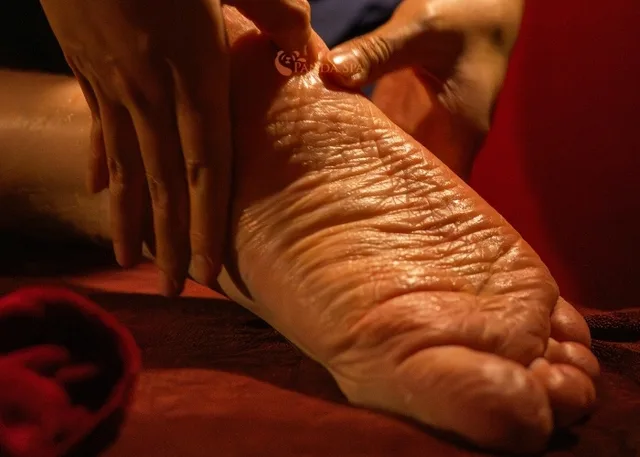
According to traditional medicine, the Yongquan acupoint is believed to have the effect of supporting relaxation and creating a pleasant feeling. Currently, modern research mainly notes that pressing this area can contribute to stimulating sensory nerves, supporting the foot massage before sleep process, which can help some people find it easier to fall asleep.
2.4. Step 4: Impact the area around the ankle supporting bones and joints
The location of the Taixi acupoint lies in the depression between the posterior border of the medial malleolus and the heel tendon (Achilles tendon). Place the fleshy pad of your thumb into this depression, proceed to press and gently rotate in circles continuously for 1 to 2 minutes.
The pressing manipulation in this area not only helps reduce heel pain but also supports circulation around the ankle area. When the soft tissues around the ankle are relaxed, blood circulation in this area can be improved, contributing to significantly reducing the feeling of heavy feet.
2.5. Step 5: Calf massage circulates blood back to the heart
This is the decisive stage in foot massage for blood circulation. Use both palms to tightly hug the entire circumference of the calf. Perform a firm, solid, and continuous stroking manipulation along from the ankle area straight up towards the back of the knee (repeat 15-20 times).

This centripetal stroking sequence creates light mechanical pressure directed from the periphery to the center, thereby supporting the venous return process in the lower limbs. Repeating this movement can support improving lower limb circulation and contribute to reducing stiffness in the calves. Despite bringing good effects, this therapy still has medical boundaries you need to adhere to.
3. Mandatory medical contraindication boundaries to know
Although massage brings very good physiological effects, you absolutely must not perform it if your body is suffering from certain specific underlying diseases. Correctly identifying physical limits is a mandatory principle to ensure absolute safety when self-massaging at home.
3.1. People with deep vein thrombosis or severe varicose veins
For those diagnosed with deep vein thrombosis (DVT), medicine absolutely forbids beating or kneading. Violent pressure can dislodge blood clots (thrombi) clinging to the vessel lumen. They will drift back to the heart and can cause pulmonary embolism, leading to a directly life-threatening risk.

For cases of common lower extremity varicose veins, you are not absolutely contraindicated but must be particularly gentle. You should only stroke very gently from bottom to top with cold oil to support blood vessels, absolutely no deep pressure. You should consult Da Nang Massage services with medical expertise if you want therapy.
3.2. People with diabetes complicated by neuropathy
People with long-standing diabetes often experience impaired peripheral nerve sensation. Due to the loss of hot/cold and pain sensation, they cannot self-assess whether the hand force acting on their skin is strong or light.
Pressing too hard easily causes hidden micro-tears under the skin. In a high blood sugar environment, these small damages are very hard to heal and easily lead to ulcers and infections that patients cannot feel early on.
3.3. Acute musculoskeletal injuries
When the leg is in an acute injury phase, the surrounding soft tissue area usually has a swelling, hot, red, and painful reaction. You absolutely must not massage on leg areas that are suffering from severe sprains, torn ligaments or cracked bones, broken bones, or unstable musculoskeletal damage.

Applying heat-generating physical impacts at this time will stimulate more blood rushing to the inflammatory site, aggravating the physical structure and increasing edema. For these damages, cold compresses and immobilization are the most accurate first aid methods. Besides knowing the safety limits, many people still have common questions when practicing.
4. Answering questions about how to do foot massage for blood circulation
During the process of applying self-care methods at home, thorough understanding will help you achieve the best recovery effectiveness. Below are direct answers to the most common questions when applying this conservative therapy to daily life.
4.1. Does foot massage for blood circulation help reduce leg numbness?
Gentle massage operations can support increasing peripheral circulation and reducing the feeling of numbness due to muscle tension or poor circulation. However, if the numbness lasts long or progresses severely, you should go to a specialist for cause evaluation instead of self-treating at home.
4.2. When do I need to see a doctor instead of self-massaging feet at home?
You should see a specialist doctor immediately if the following warning signs appear, as they may be related to dangerous vascular or neurological pathologies:
- Leg numbness lasting for many days with no signs of improvement.
- Swelling in one calf accompanied by pain and hot redness (suspected sign of DVT).
- Severe calf pain every time walking or moving.
- The skin of the feet turns unusually pale or purplish.
- Prolonged cold feet accompanied by complete loss of sensation.
4.3. Should elderly people do foot massage for blood circulation every day?
Elderly people can absolutely do it daily to overcome cold hands and feet. However, they should only massage with gentle stroking force on the skin surface and maintain a short time of about 15 minutes, avoiding using too deep acupressure force causing pain.
4.4. How long does it take for foot massage to be effective?
Many people feel warming up and reduced leg heaviness immediately after the first practice session (about 15-20 minutes). However, to thoroughly improve chronic poor circulation, long-term effectiveness depends on you maintaining this habit regularly for many weeks.
4.5. Should I soak my feet before massaging?
Highly recommended. Soaking feet in warm water mixed with a little salt or ginger for 5–10 minutes helps create a warm feeling, relaxes muscles, and supports the subsequent foot massage for blood circulation process to be more comfortable and achieve higher effectiveness.
4.6. Should people with varicose veins get foot massages?
People with mild to moderate varicose veins can still perform gentle stroking movements in the direction from the ankle up to the knee. However, avoid strong pressing, beating, or using high-force massage tools. If pain, swelling, or severe varicose veins appear, the patient should consult a doctor before doing it.
4.7. When should I apply foot massage for blood circulation?
The most suitable time to perform foot massage for blood circulation is in the evening, about 30–60 minutes before going to bed or after prolonged activity. Massaging at this time can support muscle relaxation, create a local warming sensation, and help the feet reduce the feeling of heaviness and fatigue after a day of activity. However, you should do it with moderate force and stop immediately if pain, increased numbness, or abnormal discomfort appears.
* Important note: Foot massage is only supportive in relaxing and improving peripheral circulation. This method does not replace the diagnosis or treatment of vascular, neurological, or musculoskeletal diseases.
5. Conclusion - Apply foot massage for blood circulation properly
In summary, understanding the biological nature and correctly practicing foot massage for blood circulation at home will help you protect your movement system's health wisely. Maintaining regular centripetal stroking operations every evening is the golden key to dispel the feeling of numbness and freezing cold. Always listen to your body's feedback to have the most suitable impact force. If you are looking for a more intensive and methodical health recovery roadmap, do not hesitate to visit Panda Spa to be cared for by the leading dedicated technicians.
CONTACT NOW
CONTACT NOW
All core contact channels are grouped here so visitors can book or ask quickly.