Is Foot Massage For Pregnant Women Safe? Things To Know
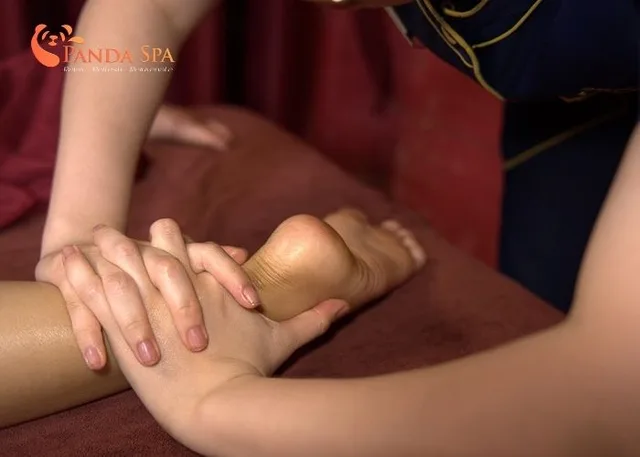
Foot massage for pregnant women is often sought when legs feel heavy in the afternoon, slightly swollen, or prone to cramps at night. This article answers in detail whether pregnant women should get a massage, points out areas to avoid, instructs on brief home massage, and when to go to a spa. If you want to experience gentle hand pressure in a quiet space, you can contact Panda Spa.
1. Can pregnant women get a foot massage?
The answer is YES, if only gentle stroking movements are performed on the skin surface and the mother feels completely comfortable throughout the process. Absolutely do not press deeply, do not look for pain points, and do not use strong pressure machines.
-
How to self-check hand pressure immediately: If the mother still breathes evenly, talks normally, and does not want to pull her foot away, the pressure is at a stable level. If feeling sharp pain, deep numbness, or abdominal tightness, stop immediately.
-
Medical note: Pregnancies with signs of threatened miscarriage, premature birth, high blood pressure being monitored, or a history of swelling and pain in one leg require consulting a doctor first. Foot massage for pregnant women is merely supportive for relaxation, not a mandatory prescription.
2. 3 outstanding benefits of gentle foot massage for pregnant mothers
Practical benefits come from resting in the correct posture combined with gentle stroking after a long working day, absolutely not from using strong force.
2.1. Reduce swelling of feet and ankles
Common situation: In the afternoon after work or a check-up, the ankles feel tighter in shoes than in the morning. The mother should elevate her legs for 10 minutes, then gently stroke from the toes back towards the ankles. The expected feeling is to help the legs feel less heavy, not to make the swelling "deflate" immediately.
Note: Even swelling on both sides that decreases after resting is a common physiological phenomenon in the late stage. If swelling occurs on one side, accompanied by rapid redness and heat, the mother should not continue rubbing but needs to see a doctor immediately.

2.2. Help reduce night cramps
Common situation: In the middle of the night, calf muscles cramp when turning over. Before going to bed, gently rub the calves from the bottom up and keep the toes softly pointed for a few breaths. Avoid pressing directly on the cramping spot. If cramps appear frequently, accompanied by swelling or prolonged pain, report it to the doctor during the next prenatal check-up.

2.3. Mental relaxation and support deeper sleep
Common situation: Wanting to sleep at night but legs feel restless after a day of sitting at a computer or walking a lot. The mother just needs to rub the soles of her feet for 5–7 minutes, turn off the phone, and keep the lighting dim. A slow rhythm is more important than a long duration. The reasonable effectiveness of foot massage for pregnant women is to make that night more comfortable, not to definitively treat prolonged insomnia.

3. WARNING: Acupressure points to avoid during prenatal foot massage
This content does not instruct on acupressure but only helps the practitioner identify areas that must absolutely not be pressed deeply to protect the safety of the fetus.
3.1. The inner ankle area requires special caution
Take the inner ankle bone (the protruding bone on the inside of the ankle) as a landmark. The area right above the inner ankle bone, about one finger joint to a small handspan along the inside of the lower leg, is an area advised to avoid strong pressing.
When working across here, only slide gently with the whole palm and move on, do not stop to press on a single point. If unsure, completely skip the inner ankle area; just rubbing the soles, toes, and the outside of the lower leg is effective enough.

3.2. Safety principle: Only stroke and rub, absolutely no deep pressing
Remember a consistent principle for all operations related to forbidden acupoints during pregnancy: do not look for pain points to press. Always use the palm, move continuously with evenly distributed force.
-
Do not use knuckles, hard tools, massage guns, or deep press machines.
-
Massage oil only needs a thin layer; stay away from heating oils and balms that cause skin burning.
4. Guide to safe prenatal foot massage at home (4 steps)
The foot massage routine at home should be brief: about 10–15 minutes for both legs.
4.1. Step 1: Prepare massage oil and safe sitting posture
-
Tools: Mild coconut oil or baby oil, a leg elevation pillow, and a clean towel.
-
Posture: The mother sits leaning back, legs stretched out or moderately elevated. The helper sits at a lower position to avoid bending over for too long.
-
Note: When the belly is large, avoid lying flat on the back for a long time as it easily causes shortness of breath. The mother can sit during the massage session or lie on her side after finishing.
4.2. Step 2: Relaxing warm foot soak before rubbing
Only soak feet in moderately warm water for about 5–10 minutes. Using water that is too hot can easily make the mother dizzy. Ensure the room is well-ventilated and someone is nearby if the mother tires easily. Dry feet completely before applying oil.

4.3. Step 3: Gentle stroking from toes to ankles
Perform on each leg sequentially following these steps:
-
Apply a thin layer of oil to the sole.
-
Gently stroke from the toes towards the heel and ankle (do 8–10 times).
-
Gently rotate each toe.
-
Rub the sole with a slow rhythm.
-
Stroke the calf from the ankle upwards with moderate pressure.
4.4. Step 4: Listen to the mother's feedback throughout the process
Continuously ask the expectant mother after each movement: "Does it feel comfortable?". If the mother responds "a bit sharp" or uncomfortable, immediately reduce force or stop completely. That is the best way to keep safe without memorizing too much complex theory.

5. Guide to foot care by pregnancy stage
Each trimester will have different physical characteristics, the table below helps you quickly look up appropriate handling methods:
| Pregnancy stage | What to DO | What NOT to do |
| First trimester | Limit massage; prioritize resting and elevating legs | Long duration rubbing, deep pressing, using pressure machines |
| Second trimester | Gentle stroking for 10–15 mins, frequency of a few times/week | Using specialized therapeutic acupressure packages |
| Third trimester | Elevate legs combined with gentle stroking to reduce leg heaviness | Perform when swollen on one side or experiencing abdominal tightness |
5.1. First trimester: Prioritize limiting external impacts
The first three months are when the fetus is taking shape, so unnecessary stimuli should be minimized. If the legs do not feel much discomfort, the mother does not need a massage yet. Prioritize resting, elevating the legs when sitting for a long time, and moving around gently.
5.2. Second trimester: Suitable time for gentle relaxation
During this stage, the mother's body is more stable. The mother can gently rub her legs a few times a week at the end of the day. If choosing to go to spa facilities, clearly inform them of your pregnancy week and request staff to only perform gentle stroking and rubbing movements.

5.3. Third trimester: Focus on reducing swelling and leg heaviness
Foot massage for pregnant mothers in the last 3 months should focus maximally on relieving the feeling of heaviness. Elevating the legs before rubbing is much more important than increasing hand force.
Emergency warning: Stop the massage and contact a medical facility immediately if swelling increases rapidly, sudden pain in one leg occurs, accompanied by severe headache, blurred vision, or abdominal contractions.
6. Cases where pregnant mothers should absolutely NOT get a foot massage
To ensure absolute safety for the pregnancy, mothers should not self-massage their feet if they fall into one of the following cases:
-
Showing signs of threatened premature birth, or having a history of premature birth or miscarriage.
-
Abnormal swelling and pain in one leg.
-
Suffering from severe varicose veins making the skin hot and red.
-
Pregnant mothers with gestational hypertension under observation.
-
Feet having open wounds, inflammation, or fungal itching.
-
The body is experiencing fever or unusual fatigue.
When belonging to the above groups, the safest solution is to temporarily suspend all massage operations until receiving consent from a specialist doctor.
7. Should I self-massage at home or go to a Spa to relax?
-
Perform at home: Suitable when you have a relative to assist gently and only need a quick 10–15 minute relaxation before bedtime.
-
Go to a professional Spa: Suitable when having no assistance at home, wanting more stable hand force for a longer duration, or needing a completely quiet space to rest after a long working day.
Practical comparison table:
| Criteria | Home foot massage | Spa experience |
| Proactivity | Flexible timing, short operations, easy to stop | Requires advance booking, served according to protocol |
| Experience | Self-adjust posture, force depends on the practitioner | Stable force, private quiet space |
Before booking a service, you should clearly inform them of the number of pregnancy weeks and the desired level of pressure. At Panda Spa, you can absolutely ask the technician to only perform gentle stroking and rubbing movements right from the start. A massage session should only stop at a pleasantly relaxing threshold and does not replace regular prenatal check-ups.
8. Frequently Asked Questions About Prenatal Foot Massage
The FAQ section below answers common questions when choosing and performing foot massage during pregnancy, from using massage machines to appropriate duration and frequency.
8.1. Should pregnant women use automatic foot massagers?
Air compression machines or strong vibrators are very difficult to control pressure points around the ankle area, so experts often advise pregnant mothers to avoid them. Manual stroking helps to easily adjust the force and stop in time. If you still want to use a machine, it should only be set to the lightest level for a short time.
8.2. How many times a week and how many minutes each time should a prenatal foot massage be done?
For pregnant mothers with normal health, a frequency of 2–4 times per week, for 10–15 minutes each time, is just enough. It is not necessary to do it daily. The most accurate measure is feeling lighter legs after doing it, without any additional pain or discomfort appearing.
8.3. Is it safe for pregnant mothers to soak their feet in warm water daily?
Soaking feet in moderately warm water is completely safe. However, absolutely do not use water that is too hot. If feelings of palpitations or dizziness appear while soaking, move to an airy place and end the soaking session. Avoid applying skin-burning balms right after finishing a foot soak.
9. Conclusion: Tips for choosing a safe foot massage method
The core principle when massaging feet for pregnant women is: only gentle stroking, short duration, and appropriate for each stage of pregnancy. Knowing clearly the areas to avoid and when to stop is much more important than trying to do it for a long time.
If you are looking for a gentle, standard hand pressure in a quiet space to relax, please contact Panda Spa for the most thoughtful consultation and support for your pregnancy.
CONTACT NOW
All core contact channels are grouped here so visitors can book or ask quickly.
- Hotline+84 70 818 5397
- Emailbooking@pandaspa.vn
- MessengerPanda Spa
- Kakao TalkPanda Spa
- NaverPanda Spa
- TripadvisorPanda Spa & Massage In Danang City
- Panda Spa & Massage229 Nguyen Van Thoai, An Hai, Da Nang 550000, Viet Nam
- Panda Relax Spa225c Nguyen Van Thoai, An Hai, Da Nang 550000, Viet Nam

Panda Spa has two branches on Nguyen Van Thoai street (229 & 225C), close to My Khe beach. Our therapists and receptionists share what they learn from guests every day.