Table of Contents≡
CONTACT NOW
Herbal head spa is increasingly chosen by many people because of its gentleness and ability to nourish hair from the roots. The article focuses on how to choose the right herbs for each hair condition, brewing formulas that retain essential oils, and practical notes to help achieve clear results. If you want a more professional experience, you can refer to the treatment at Panda Spa.
1. The nature of herbal head spa and practical benefits
Herbal head spa is a hair and scalp care method combined with acupressure massage. This method uses water brewed from natural leaves to help clean dandruff, reduce hair loss, relax the mind, and reduce fatigue. This is why more and more people are switching to using herbal head spa instead of regular industrial shampoos.
1.1. How is herbal head spa different from regular shampoo
Regular shampoos often contain strong detergents to create a lot of foam and clean quickly. Long-term use can strip the scalp's natural oil layer, leading to dryness, itchiness, or conversely, excessive oiliness.
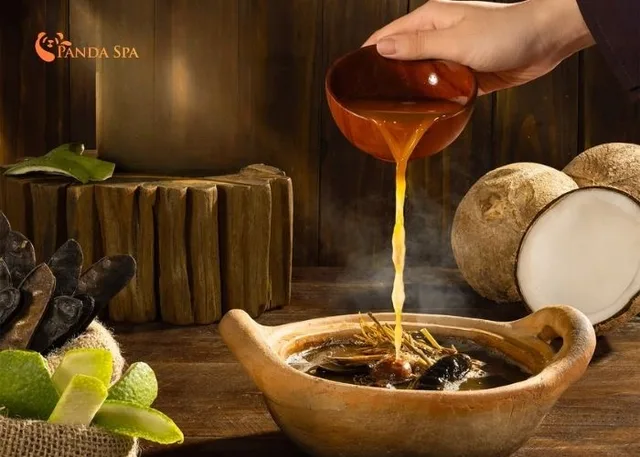
Meanwhile, herbal head spa relies on natural saponin active ingredients from locust beans and essential oils from herbs. The washing water has a cockroach brown color, a mild fragrance, and moderate cleansing ability. The biggest difference is its gentleness and long-term nourishing ability instead of just surface cleaning. Many people after switching to this method feel their scalp is more breathable and their hair is noticeably less frizzy.
1.2. Clear benefits for dandruff, hair loss, and weak scalp

When used regularly, herbal head spa brings many practical benefits. Saponin helps clean dandruff and sebum gently. Essential oils from grapefruit peel and lemongrass support stimulating blood circulation, reducing hair loss.
Combined massage also helps reduce headaches, stress, and improve sleep. For those with a weak scalp or thin hair, the effectiveness is usually clearest after 3 to 6 weeks. Hair becomes strong from the roots, breaks less when combing, and has more natural softness compared to long-term use of chemical shampoos.
2. How to choose and mix herbal head spa according to needs
It's not always true that the more herbs, the better. Mixing correctly according to hair condition will bring higher efficiency and avoid wasting ingredients when making herbal head spa.
2.1. Locust beans and grapefruit peel: the foundation for cleansing and stimulating hair growth
Locust beans are an indispensable ingredient in most herbal head spa formulas. The saponin active ingredient creates natural foam, cleans dandruff and sebum without causing dryness. Grapefruit peel contains essential oils that help stimulate hair follicles and support hair loss reduction.
The common ratio is 60-70% locust beans combined with 20-30% grapefruit peel. This mix is suitable for most hair types, especially oily hair or hair that frequently has dandruff.
2.2. Goosegrass and Fallopia multiflora support strong hair and reduce graying
Goosegrass helps strengthen hair roots, reducing hair breakage and frizz. Fallopia multiflora, according to Eastern medicine, has the effect of nourishing blood, nourishing hair from the inside, and supporting the limitation of premature gray hair. These two should be added when hair is weak, easily broken, or starts to have a lot of gray hair. The suitable ratio is about 10-15% of total ingredients so the washing water is not too thick or has a strong smell.
2.3. Lemongrass, mint, and ginger create a refreshing feeling and blood circulation

Lemongrass and mint bring a pleasant fragrance, helping the mind relax right while washing. Fresh ginger has warming properties, supporting blood circulation in the scalp and reducing headache sensations. This group of herbs should be added at the end of the boiling process to retain essential oils. They are particularly suitable for people who are frequently stressed or sit at a computer for many hours.
3. Herbal head spa brewing formula that retains essential oils
Proper brewing largely determines the effectiveness of the washing water. Below are detailed instructions based on practical experience when preparing herbal head spa.
3.1. Prepare ingredients and standard ratios for each hair type
For normal or oily hair:
- 300g dried locust beans
- 100g grapefruit peel
- 50g lemongrass
- 30g mint
- 2.5-3 liters of clean water
For dry or weak hair:
- 200-250g locust beans
- 50g goosegrass
- 30-40g Fallopia multiflora
- Keep the rest of the ingredients the same
Ingredients should be old, dry, and not moldy. Locust beans need to be lightly roasted until fragrant and the shell turns cockroach brown.
3.2. Steps to brew herbal extract without losing nutrients
- Roast locust beans evenly on both sides until fragrant.
- Put locust beans and grapefruit peel in a pot, cover with water, boil, then lower the heat and simmer for 40-60 minutes.
- Add lemongrass, mint, and ginger in the last 8-10 minutes to retain essential oils.
- Turn off the heat, let it cool, filter out the residue through a filter bag or clean cloth.
- If you want it concentrated, simmer further on low heat until the water amount is reduced to about 2/3.
3.3. The most effective way to store and use washing water
Let the washing water cool completely, then put it in clean bottles, and store in the refrigerator for 7-10 days. When washing, dilute with warm water at a ratio of 1:2 or 1:3. Massage the scalp for 3-5 minutes, leave it for a few more minutes, then rinse thoroughly. If hair is dry, lightly apply coconut oil or grapefruit essential oil to the ends before rinsing.
4. Important notes when using herbal head spa
To achieve good results and avoid side effects, some important points should be noted when using herbal head spa.
4.1. Appropriate washing frequency to avoid drying the scalp

The ideal frequency is 2-3 times per week. Washing too much can unbalance the scalp's moisture. People with oily scalps can wash 3 times, those with dry hair should reduce to 1-2 times and combine with moisturizing. Maintaining a stable frequency helps the scalp adapt better.
4.2. Handling dry, sticky hair after switching to herbs
When first switching from silicone-containing shampoos to herbal head spa, hair may feel slightly sticky or dry for the first 1-2 weeks. This is the stage of removing old silicone. How to handle: rinse hair very thoroughly, avoid brushing hard while hair is still wet, use coconut oil or grapefruit essential oil to lightly apply to the ends. After the adaptation period, hair will be noticeably softer and bouncier.
5. When to combine home washing and spa experience
Washing at home brings proactiveness, but sometimes combining with a spa will help enhance effectiveness and experience when using herbal head spa.
5.1. Advantages of regular herbal washing at home
Washing at home helps completely control ingredients, save costs, and maintain a regular habit. This is a suitable way for weekly hair care. Once familiar with the formula, you can adjust the herbal ratio according to the season or hair condition.
5.2. Intensive experience at Panda Spa Da Nang

When you want to combine hair washing with intensive massage or need comprehensive relaxation, you can visit Panda Spa. Here, the herbal head spa treatment is performed by professional technicians, combining acupressure and neck-shoulder-nape massage.
The modern, clean space brings a deeper sense of relaxation compared to washing at home. This is a perfect complementary choice for those who have maintained the habit of using herbs.
6. Frequently asked questions about herbal head spa
Below are some common questions when starting to use herbal head spa.
6.1. Can herbal head spa be used for dyed hair?
It can be used. The herbal formula is gentler than chemical shampoos so it has less impact on hair color. However, avoid those with strong bleaching properties and test on a small section of hair before using on the whole head.
6.2. How much washing water should be brewed each time to avoid spoiling?
You should brew just enough to use in 7-10 days. Store in the refrigerator and use up within this time to ensure quality. If brewed too much, the water easily ferments or loses its fragrance.
6.3. Will hair get drier when switching to herbs?
In the first 1-2 weeks, hair may be slightly sticky because it is removing old silicone. After this period, hair is usually softer and stronger. Combining light conditioner at the ends will help reduce the temporary dry feeling.
Persistently using herbal head spa correctly will sustainably help strong hair and a clean scalp. Start with a simple formula at home or experience a professional treatment at Panda Spa to feel the clear difference.
CONTACT NOW
CONTACT NOW
All core contact channels are grouped here so visitors can book or ask quickly.