How to Wash Hair Properly: A Scientific Guide for Every Hair Type
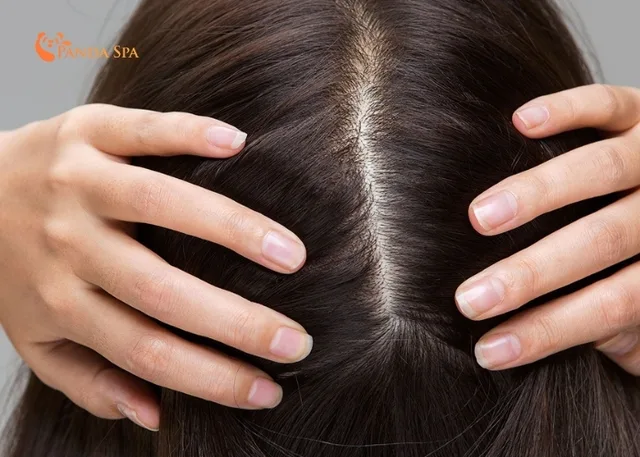
Many people often ask why their hair still faces breakage, quick greasiness, or dandruff patches despite investing in expensive shampoos. The root cause usually does not lie in the product, but rather in the fact that you have not grasped how to wash hair properly according to your own physiological characteristics. Join the healthcare experts at Panda Spa to learn in-depth knowledge about pH levels, cleansing ingredients, and care techniques to protect a healthy scalp ecosystem.
1. Signs indicating your hair cleansing routine has problems

Maintaining incorrect hygiene habits for a long time will leave many consequences for the cuticle structure and the microbiome on the scalp. The body always has natural warning mechanisms; if you notice one of the signs below, your current care method likely needs adjustment:
- Scalp shows itchy inflammatory pimples: This is often the consequence of chemical residue from shampoo or conditioner not being completely washed off, clogging pores and creating conditions for bacteria to multiply.
- Hair loses its shine and becomes rough: This condition can stem from using products that are too alkaline (high pH), which breaks the natural protective lipid membrane, causing the hair fiber surface to become rough.
- A tight, burning sensation on the scalp after washing: If your scalp feels uncomfortably dry and burning right after towel-drying your hair, it could be because you used excessively hot water, evaporating all the moisture reserved under the dermis.
Properly identifying these problems is the first step to readjusting your habits. Applying how to wash hair properly doesn't just stop at removing sebum but also means understanding your body's actual needs.
[booking-cards serviceIds=14]
2. Choosing personalized cleansing methods according to hair type
Every hair base possesses completely different physiological characteristics and nutritional needs. Applying a generalized care formula for all scalp types is often ineffective, so personalization is extremely essential.
2.1. Oil control solutions for greasy hair
The characteristic of oily hair is the overactivity of sebaceous glands, causing the hair roots to quickly flatten and attract dust. For this hair type, the most important goal is to control excess oil without stripping the natural moisture of the stratum corneum.
You should prioritize finding cleansing products containing ingredients like Salicylic Acid, green tea extract, or tea tree. These active ingredients can deeply cleanse pores and gently support antibacterial action. The appropriate cleansing frequency is usually daily or every other day with cool water, avoiding overly vigorous rubbing that stimulates the sebaceous glands to overreact.
2.2. Moisture barrier recovery regimen for dry, damaged hair
In contrast to oily hair, dry hair often lacks the physiological protective lipid membrane, making the hair surface rough, dull, and highly prone to breakage. If you use products containing Sulfates (strong detergent foaming agents), the dryness will become much more severe.

People with dry hair should space out their washing frequency to about twice a week. When washing, focus on cleansing the scalp and let the foam glide down the hair shaft naturally. It is mandatory to combine conditioners or hair masks containing Argan oil, Keratin, or shea butter extracts to fill in the damaged gaps on the cuticle.
2.3. Principles of maintaining structure for permed and dyed hair
Hair that has undergone chemical processing usually has an expanded cuticle structure, which is extremely fragile and prone to color fading. The impact of common surfactants can quickly wash away color molecules and cause curls to lose their elasticity.

The core principle in how to wash hair properly for dyed hair is to use cold water to help the cuticles close tightly, retaining the color molecules longer. You need to invest in specialized product lines labeled "Color Safe," with an ideal pH of 4.5 to 5.5 to maintain color fastness and wave structure after styling.
3. Three core techniques in the intensive cleansing process
Instead of instinctively wetting your hair and applying soap, adhering to basic technical principles will help protect your hair strands from friction. Below are the three most important techniques frequently overlooked in daily routines.
3.1. Emulsification and lather dispersion technique on hands
The habit of pouring concentrated shampoo directly onto the top of the head can cause localized chemical buildup, easily leading to irritation and redness. The scalp at the point of direct contact will have to endure a much larger amount of detergent than necessary.

The correct technique is to take a sufficient amount of product into the palm of your hand, add a little water, and rub evenly to create a fluffy lather. It is this soft foam that helps evenly disperse the cleansing active ingredients over the entire skin surface, helping to wash away sebum in the gentlest way possible.
3.2. Technique of separating specialized cleaning areas
Many people have a habit of gathering all their hair together and rubbing it vigorously. This physical friction when the hair is wet will severely damage the outer cuticle layer, leading to split ends and hair shaft breakage.
Hair care experts recommend that you should only concentrate the soap lather and gentle massaging force on the scalp and roots. For the hair shaft and ends, the lather sliding down during the rinsing process is enough to clean surface dirt without any extra rubbing.
3.3. Technique for using conditioner to lock in moisture safely
Conditioners play a role in providing nutrients and filling the gaps on the cuticle surface so the hair becomes smooth. However, if you apply conditioner while your hair is soaking wet, the nutrient concentration will be diluted and easily slip off, significantly reducing the restorative effect.

You need to use your hands to gently squeeze excess water from your hair before applying conditioner. Moreover, you are only allowed to apply the product from the mid-length down to the ends. If highly concentrated moisturizing compounds come into direct contact with the scalp, pores will become clogged, generating patchy dandruff and making the hair quickly greasy.
4. Upgrading a scientifically standard scalp care routine
To maintain an ideal growing environment for hair follicles, besides basic steps, you need to pay attention to more specialized elements. Incorporating periodic care steps will bring long-lasting protective effects.
4.1. The necessity of scalp exfoliation
Like facial skin, the scalp constantly undergoes keratinization and sheds dead cells daily. If not cleaned up, they combine with styling product residue and sebum to form a thick waxy layer that hinders the respiration of hair follicles.

Adding a periodic exfoliation step about 1-2 times a month will help free the surface, eliminating the breeding environment for fungal bacteria. You should prioritize products containing AHA, BHA, or fine natural scrubs to gently purify without scratching the skin surface.
4.2. The importance of pH levels in cleansing products
The human scalp is naturally slightly acidic, with a pH ranging from 4.5 to 5.5. This delicate acid mantle functions to inhibit the growth of harmful fungi and bacteria. When you use bar soaps or highly alkaline shampoos (high pH), this membrane will be destroyed.
When exposed to an alkaline environment, the cuticle of the hair strand opens up, making the hair rough and prone to static electricity. Carefully reading the ingredient list and choosing pH-balanced cleansing products is the deciding factor in maintaining smoothness and protecting the natural microbiome on the scalp.
4.3. Using dry shampoo at the right time
Dry shampoo is a product that offers superior convenience, helping to absorb excess oil at the roots in emergencies or when it is inconvenient to use water. However, the nature of this product is merely fine powder particles that absorb oil; they cannot remove dirt or bacteria.

Abusing dry shampoo continuously for many days to completely replace water cleansing can cause severe follicle clogging, generating seborrheic dermatitis. You should only consider this a temporary solution and need to wash your hair thoroughly with water as soon as possible.
5. Frequently asked questions about how to wash hair properly
Although washing hair is a familiar habit, many people still wonder about the appropriate frequency, how to choose products, or when to wash. Below are frequently asked questions about how to wash hair properly with short, easy-to-apply answers.
5.1. Does washing hair properly help reduce hair loss?
Washing hair properly helps clean the scalp, limits hair follicle blockage, and reduces mechanical impacts causing breakage during washing. However, if hair falls out heavily due to hormones, nutrition, or scalp pathology, you should see a doctor to determine the cause and have an appropriate treatment plan.
5.2. Should I change my shampoo regularly?
It is not necessary to change shampoo if the current product is still suitable for your hair and scalp condition. You should only switch when your care needs change, such as dyed hair, damaged hair, or if the scalp becomes more sensitive.
5.3. How often should I exfoliate my scalp?
For those with an oily scalp or who frequently use styling products, scalp exfoliation can be done about 1–2 times a month. This helps remove dirt and dead cells, supporting better scalp ventilation. Do not overuse as it may cause irritation.
5.4. Should I use dry shampoo instead of washing with water?
No. Dry shampoo only assists in absorbing excess oil and makes hair look cleaner for a short period. To clean dirt, sweat, and product buildup on the scalp, you still need to wash your hair with water and suitable shampoo.
5.5. Does washing hair properly make it less prone to greasiness?
Yes. When implementing proper washing methods, the scalp is cleaned effectively without losing the natural oil balance. At the same time, choosing the right shampoo and rinsing off products completely also contributes to limiting rapid hair greasiness.
7. Apply proper hair washing to protect hair and scalp
Applying how to wash hair properly not only helps clean the hair and scalp but also contributes to reducing breakage, limiting damage, and maintaining long-lasting healthy hair. Besides choosing the right products, listen to your scalp's changes to adjust your care habits or seek an expert when necessary. Panda Spa hopes the sharing above will help you build a scientific and effective daily hair care routine.
[snippet:Updated herbal hair wash price list in Da Nang | https://pandaspa.vn/en/tin-tuc/gia-goi-dau-duong-sinh]
CONTACT NOW
All core contact channels are grouped here so visitors can book or ask quickly.
- Hotline+84 70 818 5397
- Emailbooking@pandaspa.vn
- MessengerPanda Spa
- Kakao TalkPanda Spa
- NaverPanda Spa
- TripadvisorPanda Spa & Massage In Danang City
- Panda Spa & Massage229 Nguyen Van Thoai, An Hai, Da Nang 550000, Viet Nam
- Panda Relax Spa225c Nguyen Van Thoai, An Hai, Da Nang 550000, Viet Nam

Panda Spa has two branches on Nguyen Van Thoai street (229 & 225C), close to My Khe beach. Our therapists and receptionists share what they learn from guests every day.