Table of Contents≡
CONTACT NOW
Back, Neck and Shoulder Massage
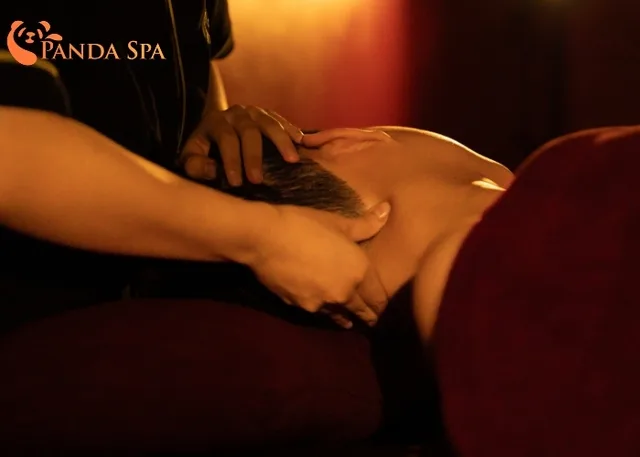
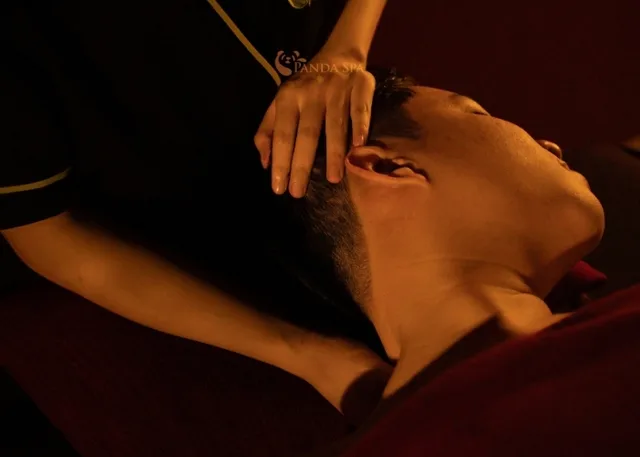
From 550,000 VNDTarget tension and stress with our Back, Neck, and Shoulder Massage. Expert techniques relieve muscle stiffness, ease travel fatigue, and combat 'office syndrome,' leaving you fully refreshed.
- 60min60 min550,000 VND
- 90min90 min750,000 VND
Sitting and working in front of a computer screen for hours on end keeps our bodies in a state of constant tension, especially the neck and shoulders. Mastering accurate neck and shoulder massage techniques will be a powerful "weapon" to help you rescue yourself from persistent aches and pains. No overly complex techniques are needed; with just a few basic kneading maneuvers distilled from the experts at Panda Spa, you can absolutely do it yourself or ask a relative to help you regain lightness right at home.
1. Benefits of Knowing Proper Neck and Shoulder Massage Techniques
Neck pain does not naturally appear, nor can it naturally disappear if you do not have appropriate physical interventions. Equipping yourself with home massage skills acts as a timely first-aid measure, helping muscles escape the "red alert" state.

Specifically, when you execute accurate neck and shoulder massage techniques, you will receive the following wonderful benefits:
- Quickly reduce muscle tension: Kneading force helps loosen muscle bundles contracted due to incorrect posture or prolonged stress, cutting off the feeling of sluggishness.
- Stimulate blood circulation: Clearing blockages, helping blood and oxygen pump smoothly to the brain, extinguishing headaches and dizziness.
- Improve sleep: Relieving pressure on nerve roots helps you avoid numb hands in the middle of the night, bringing deeper and better sleep.
- Increase range of motion: Neck joints are lubricated, helping you turn your head and tilt your neck easily without sharp pain.
2. Preparation Before Doing Neck and Shoulder Massage at Home
For the home therapy process to maximize its recovery uses, the preparation phase plays an absolute foundational role that cannot be ignored. An ideal environment and adequate tools will help the practitioner operate more smoothly and easily.
Keep in mind the following 3 important factors before touching the patient's body:
- Choose an appropriate posture: The receiver can sit up straight on a chair (the massager stands behind) or lie face down on a flat bed so the muscles are completely relaxed.
- Prepare your hands: It is mandatory to wash your hands thoroughly and trim your nails to avoid scratching the skin. Especially, rub your palms together to warm them up before massaging so as not to startle the receiver.
- Use lubricants: You should use essential oils (cajeput, ginger, lemongrass) or specialized massage cream on your hands. This oil layer helps reduce friction that causes skin irritation and creates warmth to soften muscles quickly.
3. Step-by-Step Guide on Simple, Effective Neck and Shoulder Massage Techniques
Below is the core procedure arranged in sequence from light to deep to ensure safety for the musculoskeletal system. Just do these 5 steps correctly, and the pain will be pushed back rapidly.
3.1. Step 1: Apply Oil and Warm the Skin (Gentle Stroking)
Starting the process always involves warm-up operations to help the receiver's body gradually get used to mechanical impact forces. Take an adequate amount of oil, rub it evenly on your hands, and apply it to the neck, nape, spreading to both shoulder blades.
Use your palms to stroke gently from the hairline down to the edge of the shoulder. Repeat this surface stroking movement continuously 5-7 times until the skin turns pink and warm. This is an important stepping stone in neck and shoulder massage techniques to signal the nervous system to relax before entering deep acupressure.
3.2. Step 2: Kneading and Squeezing Muscles (Reduce Shoulder Muscle Contraction)
After the skin surface is warm, we proceed to treat the stiff trapezius muscle blocks. Use 4 fingers and your thumb to grip tightly, fully embracing the highest protruding muscle block between the neck and shoulder.

Perform rhythmic squeezing and releasing movements like kneading dough, moving from the base of the neck to the outer shoulder. At lumpy muscle points, focus on squeezing thoroughly to soften the meat fibers, wringing out the stagnant lactic acid causing fatigue.
3.3. Step 3: Gliding and Pressing Along Neck Muscles (Relieve Stiffness)
This is a key step to help clear the meridians running along the spine. The practitioner places two thumbs on the muscle grooves lying parallel on both sides of the cervical spine (starting from the hollow behind the nape).

Apply moderate deep pressure and glide in a straight line down to the shoulder blade. If you detect "muscle knots" (sharp pain points), use your fingertips to press circularly in place for 10 seconds. Absolutely only glide on muscle areas, do not press directly on the vertebrae.
3.4. Step 4: How to Press Basic Acupressure Points for Quick Pain Relief
Acupressure is the quintessence of Eastern medicine that helps double the pain relief effect. First, press the Feng Chi point (located in the two deep hollows behind the nape, right at the hairline). Use your thumb to press upwards towards the top of the head for 5 seconds to completely cure headaches and eye strain.

Next, move to the Jian Jing point (the highest point of the shoulder blade, located between the neck and the outer shoulder edge). Press deeply perpendicularly for 3 seconds and rub circularly. This action is a "panacea" specifically treating neck and shoulder contraction and arm numbness.
3.5. Step 5: Muscle Stretching and Finishing
The final step helps secure the therapeutic effect and bring the body back to a static resting state. The practitioner uses one hand to support the forehead and the other behind the nape to guide the receiver to slowly tilt their head to the left, right, and slightly backward.

Combine using your hands to gently press the shoulder blades down to maximize the stretching amplitude of neck muscles. Finish by quickly rubbing your palms over the shoulder surface to warm the skin one last time, completely ending the neck and shoulder massage techniques process.
4. How to Self-Massage Neck and Shoulders (For People Being Alone)
In reality, there are not always loved ones around to support you when aches and pains strike. Equipping yourself with massage skills is an essential "lifesaver" for office workers.
You can completely treat the pain yourself right at your desk using the following methods:
- Using bare hands: Use your right hand to reach over, grip tightly, and knead your left shoulder muscle (and vice versa). To relieve neck fatigue, interlace your ten fingers behind your nape, use the heel of your palms to stroke firmly from the bottom up close to the hairline.
- Using supporting tools: Place a tennis ball sandwiched between your aching back and the wall, lean on it, and roll the ball back and forth. Or you can invest in a handheld massager or a foam roller to easily dissolve blockages yourself.
5. Important Notes for Applying Neck and Shoulder Massage Techniques Safely
Any physical therapy method when impacting the human body comes with strict safety principles. Understanding these core notes will help you avoid the situation of "making things worse".
To protect the musculoskeletal system, engrave the following issues in your mind:
- Absolutely do not: Do not crack your neck or twist it to make sudden "cracking" sounds because it easily causes torn ligaments or slipped discs. Absolutely do not apply direct pressure to the vertebrae bones.
- Control hand force: Always listen to the receiver's feedback. A slight tight feeling (pleasant pain) is hitting the right acupoint, while sharp pain means wrong force and needs to be lightened immediately.
- Subjects who should not apply: People suffering from acute musculoskeletal injuries, open wounds, dermatitis, or high fever should absolutely not perform massages.
6. Frequently Asked Questions About Neck and Shoulder Massage Techniques
During self-practice at home, you will surely have concerns about time and side effects. Below is a direct, brief answer section for the most common questions so you can be completely assured.
6.1. How long should the massage be for the best results?
To achieve optimal muscle stretching effects without damaging soft tissues, you should only maintain a therapy session lasting from 15 to 20 minutes each time. If you abuse kneading for too long with strong force, the muscles will become "callous" to feeling, even leading to swelling and local myositis instead of being relaxed.
6.2. Should this massage method be applied daily?
You should not perform intensive neck and shoulder massage techniques every day because muscle fibers need a rest time of 24-48 hours to recover themselves. The most ideal frequency is 2-3 times/week for those experiencing severe pain, and reduced to 1-2 times/week when the body has returned to a stable state.
6.3. Why do I feel more sore after the massage?
The phenomenon of slight soreness or muscle pain in the first 1-2 days after therapy is a completely normal physiological reaction. This occurs because long-standing fibrous points (muscle knots) have just been broken by force, while the stagnant lactic acid is forced to be released; after just a few days, the body will automatically feel light and refreshed.
7. Conclusion - on Safe, Effective Neck and Shoulder Massage Techniques
Equipping yourself with knowledge and mastering neck and shoulder massage techniques is a great proactive solution helping you defend yourself against chronic office diseases. However, if you are not confident in your techniques, look to reputable Spas or experience professional Massage services. Don't forget to book an appointment at Panda Spa so our skilled technicians can help you completely blow away all pains in the safest and most effective way!
CONTACT NOW
CONTACT NOW
All core contact channels are grouped here so visitors can book or ask quickly.