Table of Contents≡
CONTACT NOW
After a long day of walking or standing continuously, applying simple foot massage techniques properly is the most practical solution to help you dispel stiffness and aches. The feet bear the entire body and badly need to be pampered with gentle, easy-to-do massage operations without requiring complex skills. The article below from experts at Panda Spa will guide you through the process of self-caring for your feet at home in the safest and most effective way.
1. Why should you apply simple foot massage techniques every day?
Without spending too much time or money, self-massaging feet at home brings wonderful health changes that you can feel immediately.
1.1. Effectively relieve aches and relax foot muscles

After walking a lot or wearing high heels, the muscles in the calves and soles are often contracted. Gentle squeezing and kneading movements will help soften the muscle fibers, effectively reducing tension and heaviness in the legs.
1.2. Support blood circulation and warm the feet
The feet are furthest from the heart so blood usually circulates slowly, causing cold feet. Applying simple foot massage techniques creates friction and warmth, helping subcutaneous blood vessels dilate, thereby stimulating smoother blood circulation.
1.3. Mental relaxation and support for good sleep
The feet concentrate many nerve endings. When soothed, the brain will receive relaxation signals, helping to reduce stress. Thanks to that, you will feel more peaceful in mind and easily fall into a deep, uninterrupted sleep.

* Professional data: According to some studies on relaxing massage therapy, foot massage can contribute to improving the feeling of relaxation, supporting stress reduction, and enhancing sleep quality in some subjects.
To maximize these wonderful physiological benefits, the preparation phase before starting is extremely essential so your body can easily receive physical impacts.
2. What to prepare before massaging feet at home?

For the home self-care session to feel like being in a spa, preparation is a step not to be missed. You just need items that are very easy to find:
- Basin of warm water (about 40 degrees C): Add a little sea salt and a few slices of crushed ginger. Soaking feet for about 10 minutes before massage will help soften the skin and expand pores.
- Lubricating essential oil: You can use coconut oil, olive oil, or body lotion. Oil makes stroking and gliding operations smooth, not causing skin burning.
- Space: Choose a very comfortable seat with a backrest, soft lighting, and you can turn on some instrumental music.
When the space is ready and the feet are sufficiently warmed, we will officially enter the core massage operations.
3. Step-by-step guide on simple foot massage techniques
Summary of 6 home foot massage steps: Simple foot massage techniques at home include 6 basic steps: ankle warm-up, toe stretching, instep massage, sole acupressure, calf massage, and relaxing patting. The entire process takes only about 15–20 minutes a day.
* Safety note: The instructions below are for normal relaxation. People with complicated diabetes, severe varicose veins, or currently having acute foot injuries should consult a doctor before doing it themselves at home.
3.1. Step 1: Warm up the ankle joint before massage

This operation helps smooth the joint sockets before applying deep force:
- Sit comfortably, cross one leg over the other thigh.
- Hold the ankle tightly with one hand to fix it.
- Use the other hand to hold the toes, gently rotate the ankle 10 circles clockwise, then rotate in reverse.
3.2. Step 2: Stretch and relax the toes

Helps relieve pressure caused by wearing closed-toe shoes all day:
- Use the thumb and index finger to gently stroke along each toe from base to tip.
- Gently stretch each toe outward, then gently rotate the toe joints.
3.3. Step 3: Stroke and soften the instep
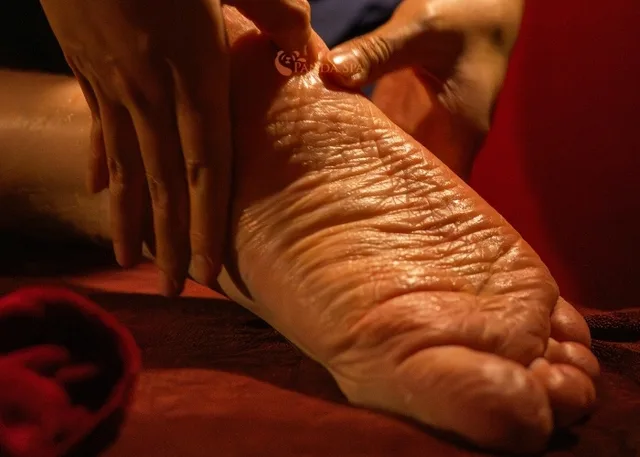
The skin on the instep is thin, so you only need to use moderate force:
- Apply a little massage oil to your palms.
- Use two thumbs to stroke along the bone grooves on the instep, aiming from the toe crevices up to the ankle. Repeat 10-15 times.
3.4. Step 4: Acupressure on the sole to relieve aches

This is the most important step helping effectively reduce aches and clear energy:
- Use two thumbs to press firmly, gliding along the hollow of the sole from the heel up to the toe pads.
- You can also bend your index finger, using the knuckle to stroke along the sole to create deeper force.
- Use the fleshy pad of the thumb to gently press the depression at the front 1/3 of the sole (Yongquan acupoint area) for 3-5 seconds to help calm the mind.
3.5. Step 5: Calf massage to support circulation

Helps reduce leg heaviness and pushes venous blood back to the heart:
- Use both palms to hug the calf closely. Stroke with a firm force from the ankle straight up to behind the knee.
- Use fingers to squeeze and gently knead the flesh on both sides of the calf to relieve muscle stiffness.
3.6. Step 6: Relaxing patting and finishing the treatment
Cup both palms (creating a space in the middle) and gently pat all over the calf and foot. This vibration helps muscles completely relax. Finally, use a dry towel to wipe clean the excess oil layer on the skin.
Once you have mastered the technical operations, controlling a reasonable execution time will directly determine the recovery level of the muscle system.
4. How long should you do foot massage every day?
To achieve the best effect, a home self-foot massage session should only last about 15 to 20 minutes. You can spend 7-10 minutes on each leg.

Regarding frequency, if you only do gentle stroking for relaxation before bed, you can do it every day. But if you use deep pressing force to reduce calf muscle fatigue, do it every other day (about 3 times/week) so muscles have time to rest.
Controlling time is good, but you also need to pay attention to avoiding common mistakes during the operation so as not to accidentally hurt yourself.
5. Mistakes to avoid when massaging feet
Doing it wrong not only doesn't help reduce fatigue but also causes counter-effects. Below are common mistakes you should avoid:
- Pressing too hard: It's not that the more it hurts, the faster the fatigue goes away. Hand force that is too strong can cause bruising or soft tissue inflammation.
- Massaging right after a full meal: Massaging at this time will disperse blood flow that needs to be concentrated in the stomach, easily causing bloating and indigestion.
- Not using lubricating essential oil: Direct friction between dry hands and foot skin will cause burning and scratching of the epidermis.
- Washing with cold water right after finishing: Pores are open; sudden encounter with cold water will cause blood vessels to constrict, easily catching a cold.
6. Who should not self-massage feet at home?

Although this method is very safe, the following groups of people should be cautious and consult a doctor before applying:
- People with severe varicose veins: Do not squeeze the calves strongly because it can damage the veins.
- People with complicated diabetes: Loss of sensation in the feet makes them susceptible to scratches or blisters if the soaking water is too hot without realizing it.
- Pregnant women: Pregnant women should consult a doctor or healthcare expert before applying deep force massage techniques, especially during high-risk pregnancy stages.
- Having acute injuries: Do not massage on areas with red swollen sprains, bone fractures, or bleeding open wounds.
7. Answering Frequently Asked Questions (FAQ)
Although simple foot massage techniques are quite easy to do, to ensure effectiveness and safety, you should clearly understand some important notes. The questions below will help you apply this method more correctly.
7.1. Should I use wooden massage tools?
You can use them, but you must control the force very carefully. The advice is for beginners applying simple foot massage techniques, using your own hands is best because hands have the ability to feel muscle stiffness and adjust force softer than wooden tools.
7.2. What oil is best to use for foot massage?
You can take advantage of available ingredients in the house such as coconut oil, extra virgin olive oil, or body lotion. If you want to increase nervous relaxation effectiveness, use lavender essential oil diluted with a carrier oil.
7.3. Can I massage while having a sprain?
Absolutely not. When just getting a sprain, that area is swollen, inflamed, and has capillary damage. Massaging and rubbing will increase internal bleeding, making the ankle swell more. At this time you should only apply cold compresses and rest.
7.4. What time is suitable to perform simple foot massage techniques?
The most ideal time to perform simple foot massage techniques is about 30–60 minutes before going to bed or after exercising and walking a lot. At this time, massaging will act as a signal notifying the brain that it's time for the body to rest and relax, thereby supporting stress reduction and physical recovery more effectively.
7.5. Are simple foot massage techniques every day good?
Yes. If you perform simple foot massage techniques with gentle stroking and relaxing movements, you can totally apply them daily to reduce fatigue and support body relaxation. However, if using deep acupressure or strong impact techniques on muscles, you should only perform about 2–3 times a week for muscle tissues to have enough time to recover.
8. Maintain simple foot massage techniques to keep feet always healthy
In summary, mastering simple foot massage techniques will give you a wonderful health care tool right at home. Just spending 15 minutes every evening with basic stroking movements, you can help your feet completely shed their burden. Don't forget to turn this into a positive habit combined with a healthy lifestyle. If you want to experience more intensive relaxing massage techniques, visit Panda Spa to be dedicatedly cared for by our specialist team.
CONTACT NOW
CONTACT NOW
All core contact channels are grouped here so visitors can book or ask quickly.