Thai Massage Review: A Real Experience from A to Z
Are you looking for authentic Thai massage review information to better understand this health recovery method before deciding to experience it? From the professional perspective of the technician team at Panda Spa, this article will analyze in detail each stage, the actual feeling, and the practical benefits that this therapy brings. Let's explore the detailed review handbook below to easily make the most appropriate body care decision.
1. Understanding What Thai Massage Therapy Is?
To have the most objective and profound assessment, we need to understand the core foundation of this therapeutic method. Grasping the origin will help you visualize why it brings such special effectiveness.
1.1. The Long Historical Origin of Thai Massage
This therapy is not simply muscle rubbing but a health care system formed thousands of years ago. It is a delicate intersection between traditional Indian medicine and the characteristic physical impact techniques of Eastern medicine. The entire technical foundation is based on the system of invisible meridian lines running along the body, where the vital life energy flows.

Physical therapy experts evaluate that using external force to clear these meridian lines is considered the most important key. The pressing process helps unblock congested points, supporting blood circulation, thereby maintaining a healthy, supple body capable of resisting fatigue much more effectively than just normal resting.
1.2. The Unique Differences in Thai Massage
The biggest difference when exploring Thai massage review articles is that customers do not need to take off their clothes and absolutely do not use slippery essential oils on the skin. Instead, you will wear loose-fitting, breathable cotton clothes and lie on a specialized floor mattress for the technician to easily manipulate.
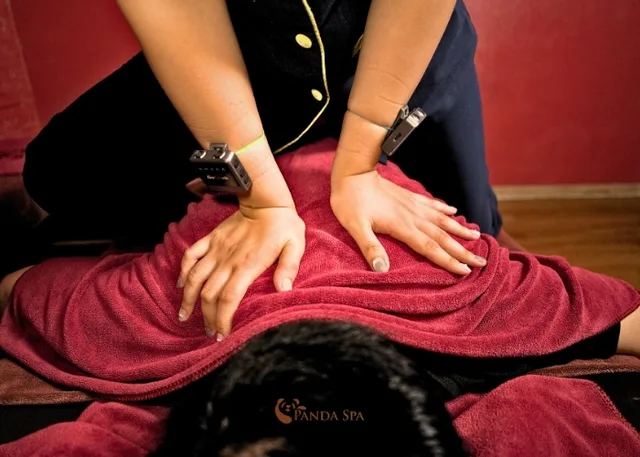
Another clear difference is that the practitioner will not only use their hands. The technician will flexibly use their body weight along with parts like palms, thumb pads, elbows, and even knees to create multi-dimensional pressing force on the entire movement system. This combination brings a much deeper and firmer impact force compared to superficial stroking schools.
2. Detailed Thai Massage Review Assessment
A standard procedure is always designed with a methodical structure, with the impact force going from light to strong. The rhythmic transition between steps helps the muscles gradually get used to the physical impacts.
2.1. Thai Massage Review in the First 15 Minutes
Entering the treatment, the technician will begin with gentle pressing movements on the feet and lower legs. The pressing force combined with the practitioner's steady breathing rhythm helps awaken the nervous system and gradually warm up the muscle bundles in the lower body. Customers will feel their heart rate begin to slow down, bringing a tranquil relaxing feeling, separated from the noise outside.
According to practical experience, this warm-up step plays an extremely important role in informing the nervous system about the upcoming impacts. Thorough warming will prevent muscle spasms or cramps when the technician begins to carry out more intensive alignment operations on the upper body.
2.2. The Stretching and Acupressure Stage of the Treatment
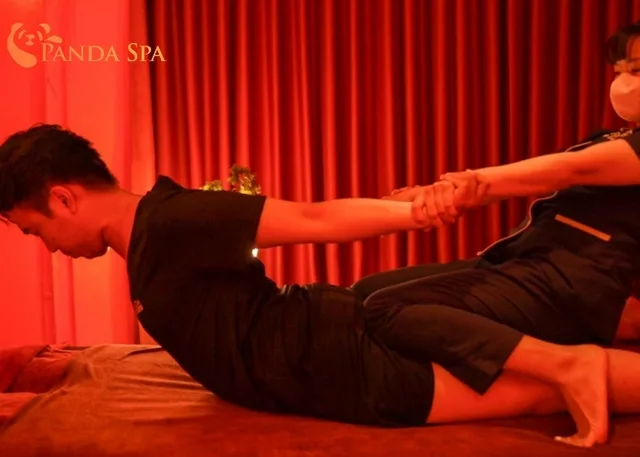
The focus of every reputable Thai massage review always lies in this core therapeutic stage. The technician will borrow gravity to perform stretching postures simulating yoga. The joints in the hip, spinal column, and shoulder blade areas will be expanded in amplitude safely, not exceeding the body's physiological limits.
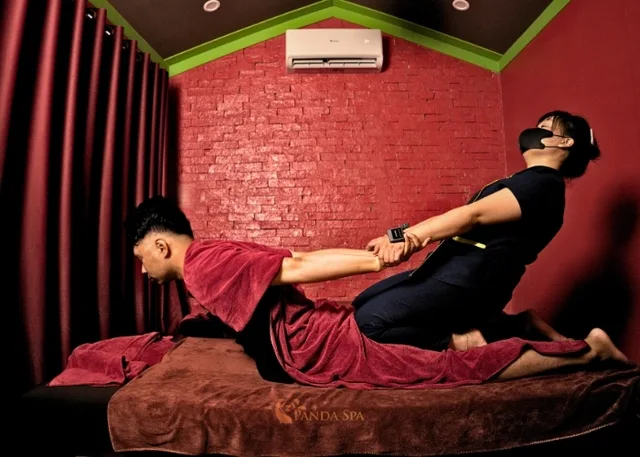
Combined with that is the technique of using the thumb to glide and statically press into stiff muscle points. The alternation between stretching and loosening creates a slightly aching feeling initially. However, after just a few breaths, you will feel an extremely relieving release spreading across the entire back area and both shoulder blades.
2.3. The Feeling After Finishing the Service
When the stretching operations end, the technician usually performs a few gentle patting or stroking movements on the head and neck to awaken the whole body. The most obvious feeling right now is the lightness of the musculoskeletal system, as if you have just shed a heavy boulder pressing on your shoulders for many past days.
The clearing of acupoints helps blood circulate better, pushing an abundant amount of oxygen to the brain. This makes the skin rosy, the spirit becomes extremely refreshed and full of positive energy. Many customers share that they get a much deeper and better sleep right that night.
3. Is the Thai Massage Treatment Painful?
This is probably the question many people are most interested in and hesitant about before deciding to book a service experience. In Thai massage review sharing communities, the term "good pain" or "satisfying pain" is frequently used to describe this feeling.

Because this method leans towards deep pressing and joint cracking, first-time experiencers may feel local tightness at the time of pressing, or slight muscle soreness the next day. However, this is a completely normal physiological reaction when muscle bundles that have been spastic for a long time are stretched and loosened. Furthermore, you always have the right to proactively communicate with the technician to reduce the impact force, ensuring the body has time to adapt gradually.
4. Analyzing the Pros and Cons of the Therapy
Any physical therapy method possesses its own strengths and a few limitations to note so that users have the most objective view. In terms of advantages, this method brings the ability to release muscle blockage points extremely effectively. It helps enhance flexibility for the movement system, minimizing mechanical pain without relying on painkillers.
Conversely, its disadvantage is that it is not really suitable for people with a low pain tolerance threshold, too sensitive to strong impact force. If you are looking for an experience that is merely gentle stroking and lulling on the skin surface, then this deep stretching technique may make you feel a bit overwhelmed the first time. Carefully researching Thai massage review articles will help you prepare your psychology better.
5. Health Benefits After the Treatment
The perfect combination of deep mechanical force and the principle of regulating qi and blood brings extremely positive biological changes to the body. From a professional perspective, twisting postures help peel off muscle bands that are tightly adhered due to living habits or wrong sitting postures for a long time.

The process of applying static force to vital acupoints helps stimulate blood flow carrying oxygen to nourish the damaged muscle tissue area, while supporting the release of stagnant lactic acid. Thanks to this mechanism, the phenomenon of stiffness in the neck and shoulder area or lower back pain in office workers will significantly subside. Moreover, loosening muscle bands also sends soothing signals to the central nervous system, helping effectively lower stress hormone levels.
6. Who Should Experience Thai Massage?
Although it brings many health recovery benefits, to optimize effectiveness, we need to correctly identify the target group most suitable for this deep mechanical impact force. This treatment is especially effective for office workers who have to sit working at computers continuously, leading to slouching, neck and shoulder pain, and numbness in limbs due to poor blood circulation.
Besides, sports enthusiasts, heavy laborers, or athletes also very much need these stretching exercises to relax muscles, preventing the risk of soft tissue injury. If you are considering looking for a high-quality Da Nang Massage service to recover physical strength after long working days, this is definitely a perfect therapeutic option worth investing in.
7. Cases Where Force Should Not Be Applied
Ensuring medical safety must always be placed first in any health care procedure. Therapists always recommend some cases where these deep joint cracking and acupressure techniques should absolutely not be applied to avoid unnecessary risks.
Typically, women during pregnancy, elderly people suffering from osteoporosis, or people who have just undergone spinal surgery. If there are open wounds on the body, infectious skin diseases, or a history of severe cardiovascular disease, you should carefully consult a specialist doctor. Do not rush to make a decision just through a few Thai massage review articles online without correctly evaluating your actual physical condition.
8. Comparing Thai Massage with Essential Oil Massage
Many customers often wonder between the two most popular therapy schools today at spa centers. While Thai massage review often focuses on describing deep pressing force, muscle stretching through cotton clothes to treat aches and pains, essential oil massage leans towards smooth relaxation on the skin surface.
Essential oil massage requires customers to take off their clothes, using smooth stroking movements combined with aromatherapy scents to soothe the nerves. In summary, if you need to thoroughly resolve aches and pains and want your body to move more flexibly, choose the traditional stretching method. Conversely, if your goal is just to have a good sleep and relieve psychological stress, prioritize choosing essential oil massage.
9. Is the Cost of Thai Massage Really Worth the Money?
The actual value brought compared to the cost spent is always the factor deciding the customer's long-term attachment. With clear health recovery effects right from the first time, from cutting down musculoskeletal pain to rebalancing the mental state, the cost for a treatment is completely commensurate with the value received.

Instead of having to endure prolonged aches that reduce work performance and affect the quality of life, proactively investing in an intensive therapy session at reputable Da Nang Spa facilities is a smart investment. You don't just buy an hour of relaxation, but are paying to buy back suppleness for the body and clarity for the mind.
10. Answering Frequently Asked Questions About Thai Massage Reviews
Synthesized from thousands of customer inquiries during the process of researching the service, below are short, straightforward answers from experts to help you grasp information the fastest.
10.1. How Often Should It Be Done?
The ideal frequency is 1 to 2 times/week to maintain suppleness and recover the musculoskeletal system. If it is just for the purpose of relaxation and stress reduction, you can do it every 2-3 weeks.
10.2. What to Prepare Before Going?
You don't need to prepare clothes because the facility will provide specialized cotton clothes. However, absolutely do not eat too full or leave your stomach too hungry for about 1 hour before the treatment time to avoid affecting the digestive system when the abdominal area is pressed.
10.3. Do I Need to Take Off My Clothes?
No. The characteristic of this method is that you will wear a set of loose-fitting, breathable clothes and perform stretching movements right on the mattress surface, absolutely no need to take off clothes or use slippery essential oils on the skin.
11. Conclusion on the Thai massage experience from a practical perspective
In summary, through the objective and in-depth Thai massage review information from the article, hopefully, you have the most general overview to make suitable health care choices. Understanding the body and experiencing at reputable facilities will determine the safety of the entire treatment. If you need consultation on a specialized musculoskeletal recovery roadmap, contact the expert team at Panda Spa immediately for the most dedicated support.
CONTACT NOW
All core contact channels are grouped here so visitors can book or ask quickly.
- Hotline+84 70 818 5397
- Emailbooking@pandaspa.vn
- MessengerPanda Spa
- Kakao TalkPanda Spa
- NaverPanda Spa
- TripadvisorPanda Spa & Massage In Danang City
- Panda Spa & Massage229 Nguyen Van Thoai, An Hai, Da Nang 550000, Viet Nam
- Panda Relax Spa225c Nguyen Van Thoai, An Hai, Da Nang 550000, Viet Nam

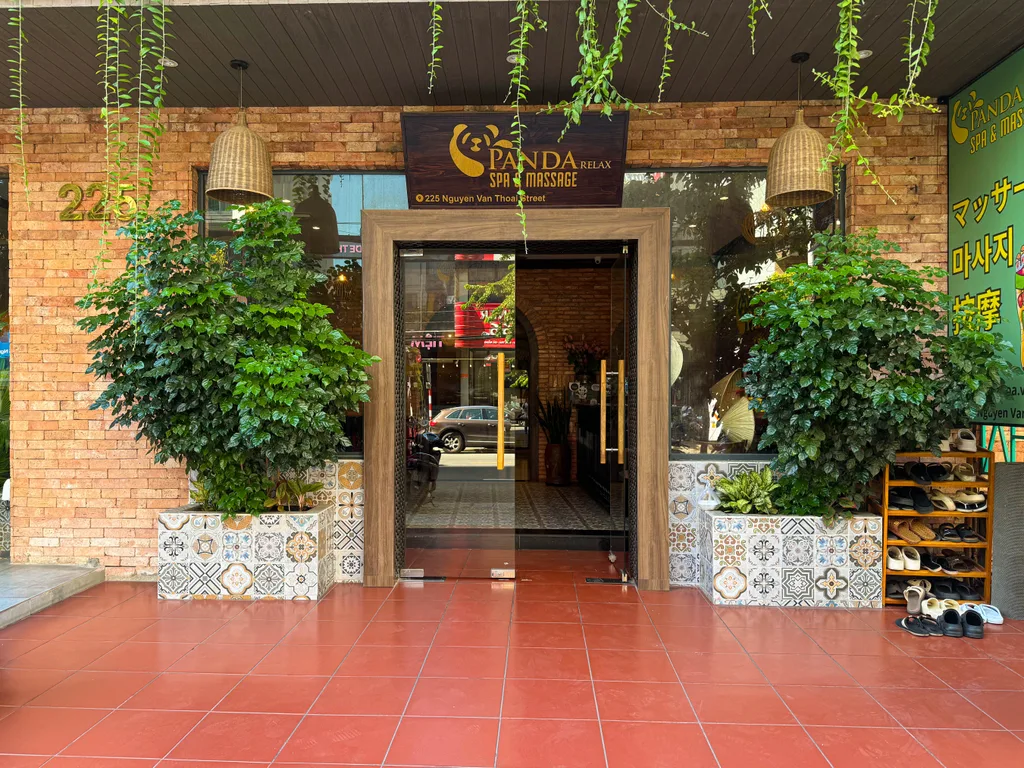
Panda Spa has two branches on Nguyen Van Thoai street (229 & 225C), close to My Khe beach. Our therapists and receptionists share what they learn from guests every day.